

Amaro Santoni's Rhubarb Aperitif
Mixed as a spritz, the bitter Italian liqueur delivers a refreshing thirst quencher

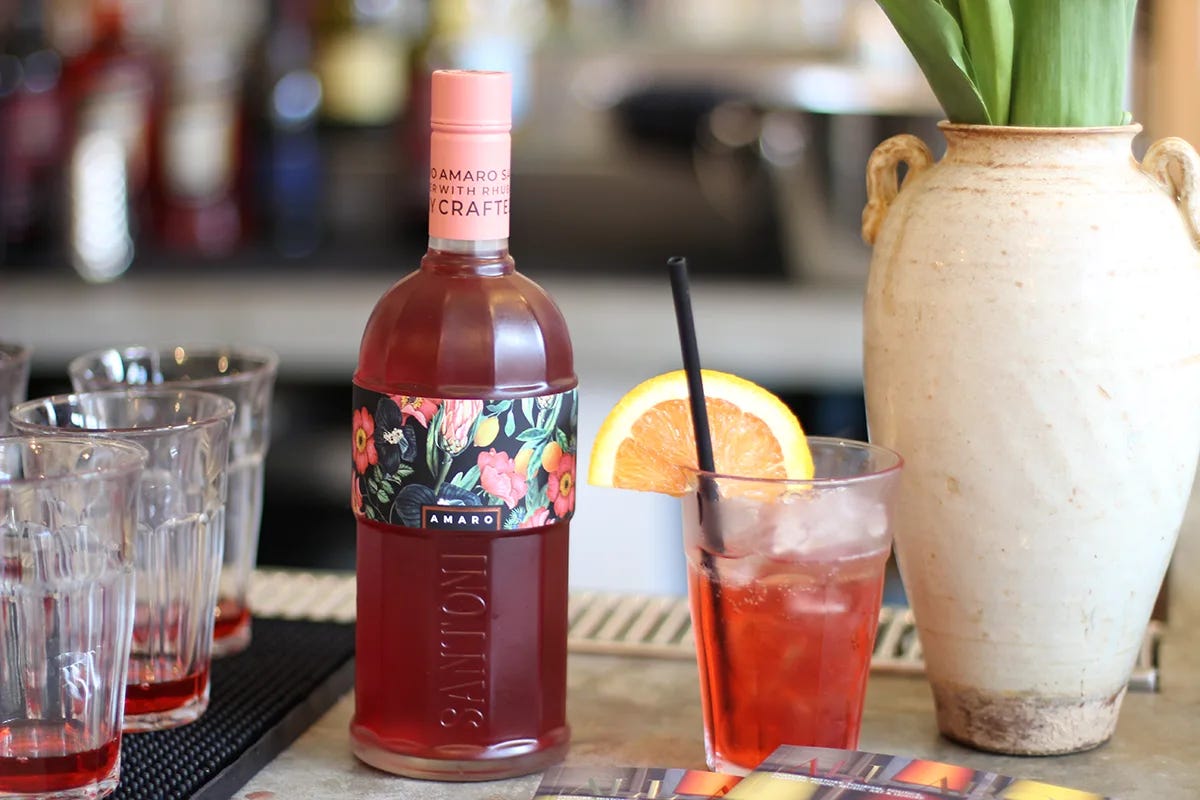
Last week I attended a press event sponsored by Toscana Promozione Turistica and All About Italy. It was hot, and I was hot, and then I arrived and they plied us with spritzes made with Santoni Amaro.
I love amaro. If you’re wondering, an Amaro is a bitter, alcoholic drink Italians insist helps with digestion. Amaros are made by combining botanicals like magic potions. The flavors range from slightly bitter to practically medicinal, and the tradition dates back to medieval monks mixing digestive potions. Every region in Italy has some variation on amaro made with a unique combination of ingredients.
Amaro has experienced a boon in recent years. Restaurants like Rolo’s in Ridgewood, Queens offers several different varieties on their drinks menu, and has crafted cocktails with it. And in the East Village, Amor Y AMargo, a bitters shop and bar, celebrates amaro in various cocktails.
Much of our collective love for Amaro is from the efforts of the Campari Group, an Italian-based multinational beverage company. Besides Campari, they own amaro brands like Cynar and Aperol. Each has been reintroduced to Americans with big marketing budgets. It was no accident that Aperol Spritz became the drink of European summer holidays. The aggressive marketing made it happen.
Another draw of Amaro, though, and the reason it persists beyond a refreshing summer drink, is the ability to experiment. Similar to gin, the botanicals, herbs, spices, zest and other infused flavors offer an endless combination. The result is unusual, exotic, and quirky. Bitterness can hide imperfection.
New York distilleries have also jumped on the amaro trend. Forthave Spirits has some downright medicinal tonics, like their Marseille Amaro with notes of eucalyptus, cinnamon, rhubarb, and honey. Another Brooklyn-based brand is Faccia Brutto, intentionally creating Italian-style amari.
I experiencing the different flavors of Amari, both from Italy and from right here in New York City. Not only are these medicinal drinks good for digestion, but they’re typically lower in alcohol (although not always).
Campari has helped create the market for Amaro brands, and smaller producers have benefitted. Twee liquor stores in Brooklyn often have at least one or two smaller producers stocked. For a wider selection though, I end up at Astor Liquor in Manhattan where there is a large selection of exotic Amari, both domestic and imported.
If you’re interested in exploring more about Amaro, Brad Thomas Parsons literally wrote the book on them, Amaro The Spirited World of Bittersweet, Herbal Liqueurs, with Cocktails, Recipes, and Formulas.
Meanwhile, it’s Italian Aperitif Week in New York City. All About Italy magazine is celebrating Italian cocktails and liqueurs by drafting 10 bar tenders at 10 bars around the city to develop cocktails. Participants can even vote on their favorite.
Santoni is a Florentine amaro, and so it makes sense that it was the star cocktail at Tuscany-sponsored event last week. The botanical flavors include iris flower, olive leaf, and rhubarb, providing a rich red color and bitter flavor. The original recipe was developed by Gabriello Santoni in 1961.
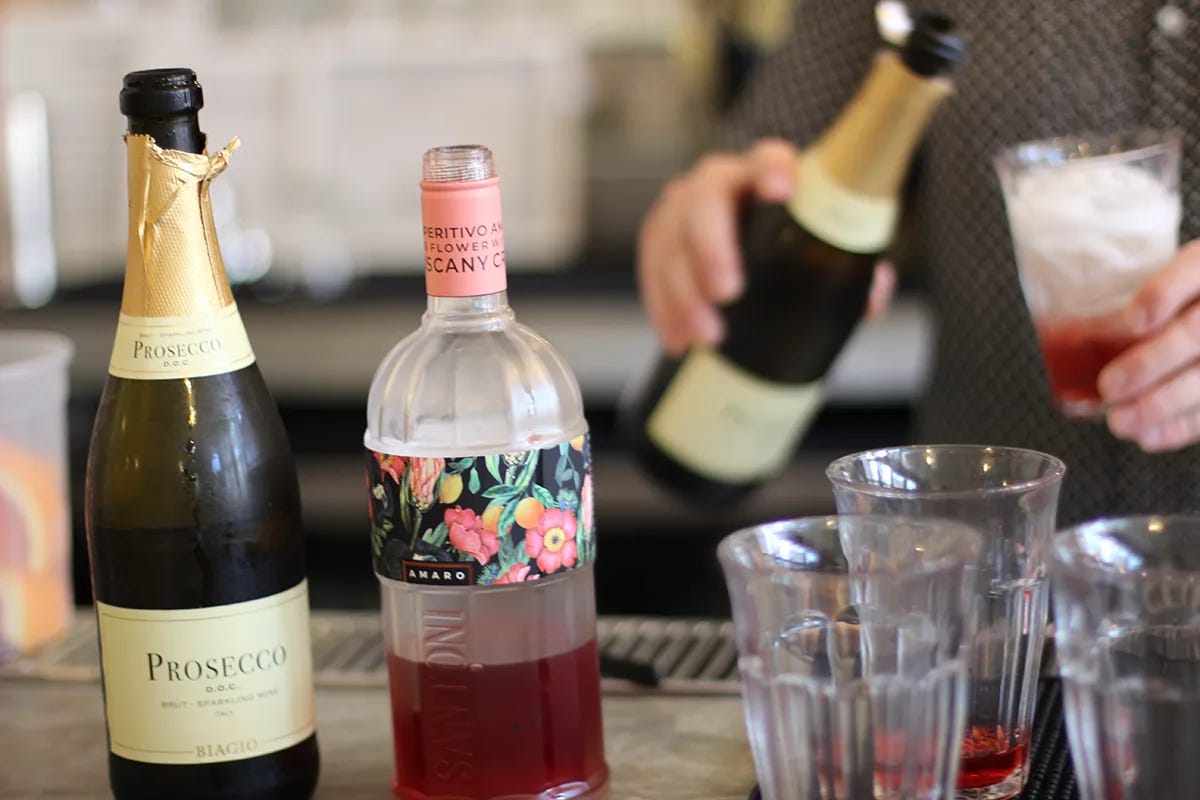
I came across Wendy Holloway’s Flavor of Italy Podcast (She and I spoke last year about Red Sauce) where she chatted with Luca Missaglia, the managing partner at Amaro Santoni.
Missaglia explained that Santoni can be served not just as a digestif, but also an aperitif because the formula is bitter-sweet. It works well with sodas and other sweet drinks.
And that’s why it worked so well as a spritz. Luxe magazine published a spritz recipe back in 2024 — 2 parts Amaro Santoni to 3 parts prosecco, garnished with an olive. We were served a tumbler with ice and amaro, topped with prosecco and garnished with an orange slice. I had two.
Thanks for your kind words, Ian!