

Food Notes: 12/16 - A History of Chinese American Egg Rolls
Egg rolls, bowls, cookbooks, Yule log cakes, and more!

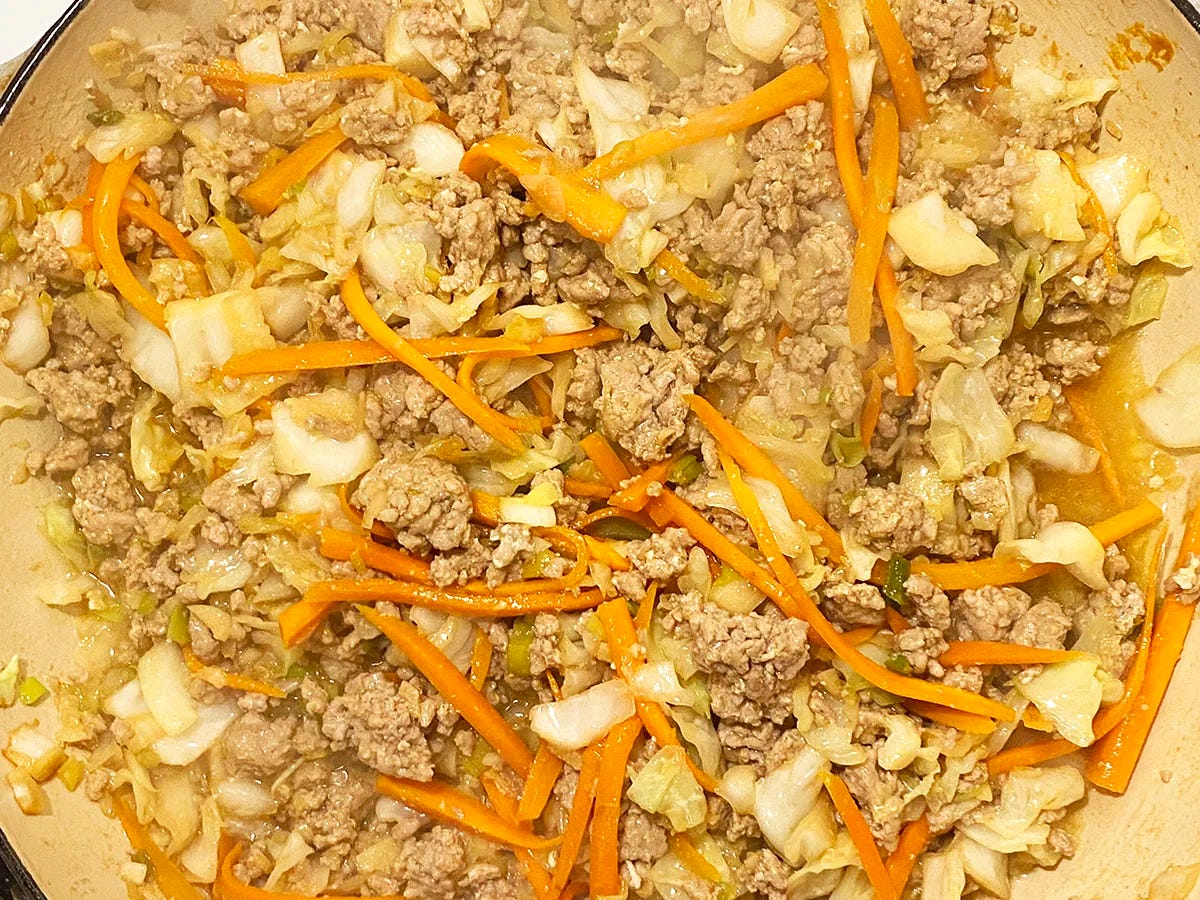
I cooked up a deconstructed egg roll, which means we get to talk about egg rolls and the bowlification of American food.
You might have noticed we’re a day late with this post, but I have my reasons. Mainly I was up late for the annual “watching Love Actually and live Tweeting it.” But that means we just have more time to talk about egg rolls today.
Egg rolls are a quintessentially Chinese American dish. In The Fortune Cookie Chronicles, Jennifer 8 Lee spoke to a Monty McCarrick, who explained in his travels that egg rolls are one of the few dishes that Chinese American restaurants typically make their own, in a unique and different way. That makes egg rolls one of the more interesting ways restaurants can express their local influences, and explains delicious innovations like the Pizza Roll from Sen Hai.
As with many Chinese American dishes, the egg roll has roots in Chinese cuisine, but distinctly American influences. Still, the story of the origin of the egg roll is a complicated one.
In Andrew Coe’s, Chop Suey: A Cultural History of Chinese Food in the United States, egg rolls are often included in the menus of the restaurants he discusses, but there isn’t much in the way of the actual origins of the dish. I found this surprisingly and decided to dig around a bit more.
That’s when I came across a newswire story in the early 1930s. In 1934, newspapers from Texas to Canada ran a story and recipe for an egg roll that sounds a bit more like a crepe stuffed with shrimp, bamboo and pork. The story, written by Mary E Dague of the NEA Services, ran in papers on both coasts over two years from 1934 until 1935. The article notes that even then many Americans knew chop suey as an American dish, and presents this egg roll as more authentic.
This eggy pancake Mary Dague introduced to America however, is not exactly the modern egg roll we think of today, wrapped tightly, deep fried, and served with duck sauce. The instructions simply don’t match – although some versions of the story do include a photograph that looks like modern egg rolls. Soon after, by the 1950s, modern egg rolls with pork, beef, and shrimp are widely advertised in newspapers. Chinese restaurants placing their menus in the paper are assuming readers are familiar with the dish. And in 1976, when Misa Chang invented Chinese food delivery on the Upper West Side of Manhattan, she of course offered egg rolls. While these menus speak to the adoption and integration of egg rolls by American consumers, it doesn’t say much about who invented the dish.
And that’s when I came to Richard Auffrey’s The Passionate Foodie, who has a deep dive into the origin of the egg roll. He identifies several potential sources, including Henry Low, author of the 1938 Cook At Home In Chinese, a restaurant in Port Arthur in the 1920s, and chef Lum Fong who is connected to a restaurant in Chinatown in the 1920s.
Auffrey’s conclusion is that the American egg roll is an evolution of a more traditional spring roll. The thicker wrapper of the egg and the heftier size – très américain – can most likely be attributed to Lum Fong, and then their popularity across the country began spreading during the 1930s.
***
I decided to make a deconstructed egg roll because I was thinking about cabbage. Cabbage is one of the healthier vegetables we can be eating, and it’s cheap too. A whole cabbage somehow has an infinite amount of cabbage in a single head. Seriously, I’ve sliced bits of cabbage off for three different dishes and there’s still more than half a cabbage in the refrigerator.
I wanted a cabbage dish, but not one influenced by eastern European cuisine. I’ve made plenty of pierogi and cabbage, cabbage and Kielbasa, and I wanted something different. That’s when I thought about egg rolls.
There was one thing I knew I wasn’t going to do though and that was sit around stuffing egg roll wrappers with filling. I’ve done that, and it’s not in my skill set.
At first, I thought this dish was going to be something of a salad. I pictured it as a crunchy, refreshing slaw with cooked porked, and so I decided to top it with crunchy Chow Mein Noodles. These crunchy noodles would become the substitute for the wrapper.
As always, I did a quick internet search for inspiration recipes. I secretly hoped of course a deconstructed egg roll would be an original idea (there are no original ideas though). I was disappointed but not surprised to see a lot of other people had already come up with this concept.
I decided to shift from an egg roll salad to an egg roll stir fry. I was going to have to cook the ground pork anyway, and so cooking the vegetables a bit with all that seemed like the better way to have the flavors mesh well. Then I asked my wife if we should make rice to go with it – and that’s when I realized I was actually making an Egg Roll Bowl.
Why is everything we eat suddenly coming as a bowl? Taco bowls, sushi bowls, meat bowls, pierogi bowls, barbecue bowls, mediterranean bowls, poke bowls, falafel bowls, beet bowls, acai bowls – its bowl mania!
One thing I know about bowls is they are great for liquids, like soups. Try ordering a matzah ball soup on a plate and you’ll end up with a mess. But outside of ordering a bowl of soup, I’ve never had a restaurant bowl.
There is surprisingly little information about the trend. (Note to self: pitch someone the history of food bowls in America). One source I did come across was a podcast from America’s Test Kitchen. The episode from 2019 found that the rise of the bowl can be tied to the increasing popularity of fast casual restaurants. Consumers love fast casual restaurants because they can pretend they aren’t eating fast food, but still have a meal that’s quick and cheap-ish and that can be easily eaten while hunched over their keyboard at work.
In the episode, Harry Wood spoke to Chad Brauze, an R&D chef at Chipotle. The chain introduced burrito bowls in 2003, and Brauze was happy to take credit for trendsetting. Burrito bowls might outsell burritos, and maybe even inspired other knock-off bowls, but was the bowl journey so simple?
That got me thinking of all the taco salads I ate in the 1990s using dinnerware made from Ortega brand taco shells. Back in 1984, Taco Bell introduced the taco salad in an edible bowl. Can we trace bowl culture back to a fast food taco shop? Or perhaps the bowlification of American cuisine is just about the friends we made along the way.
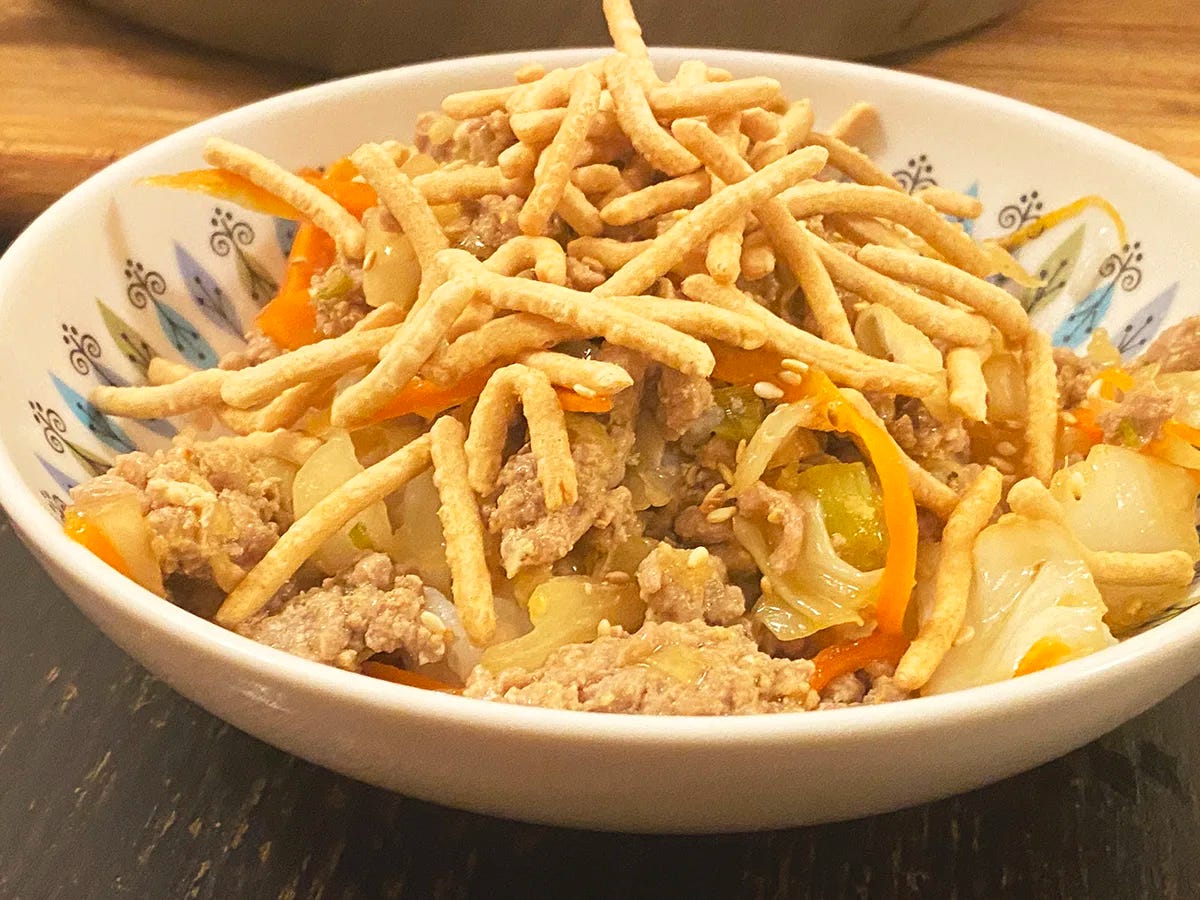
Accidentally Bowl-ified Deconstructed Egg Roll
INGREDIENTS
¼ quarter cabbage
.92 lbs or 1.32 lbs of ground pork, depending on the supermarkets package size
3 carrots
5 to 8 scallos in the back of the fridge
1 tablespoon freshly chopped ginger
4 to 8 cloves of garlic
⅓ cup of toasted sesame seeds
½ can of La Choy Crunchy Chow Mein Noodles
Splash of soy sauce
Splash of Apple Cider Vinegar
Drop or two of sesame oil
Optional hot pepper or pepper oil
Side of rice
Cooking oil
INSTRUCTIONS
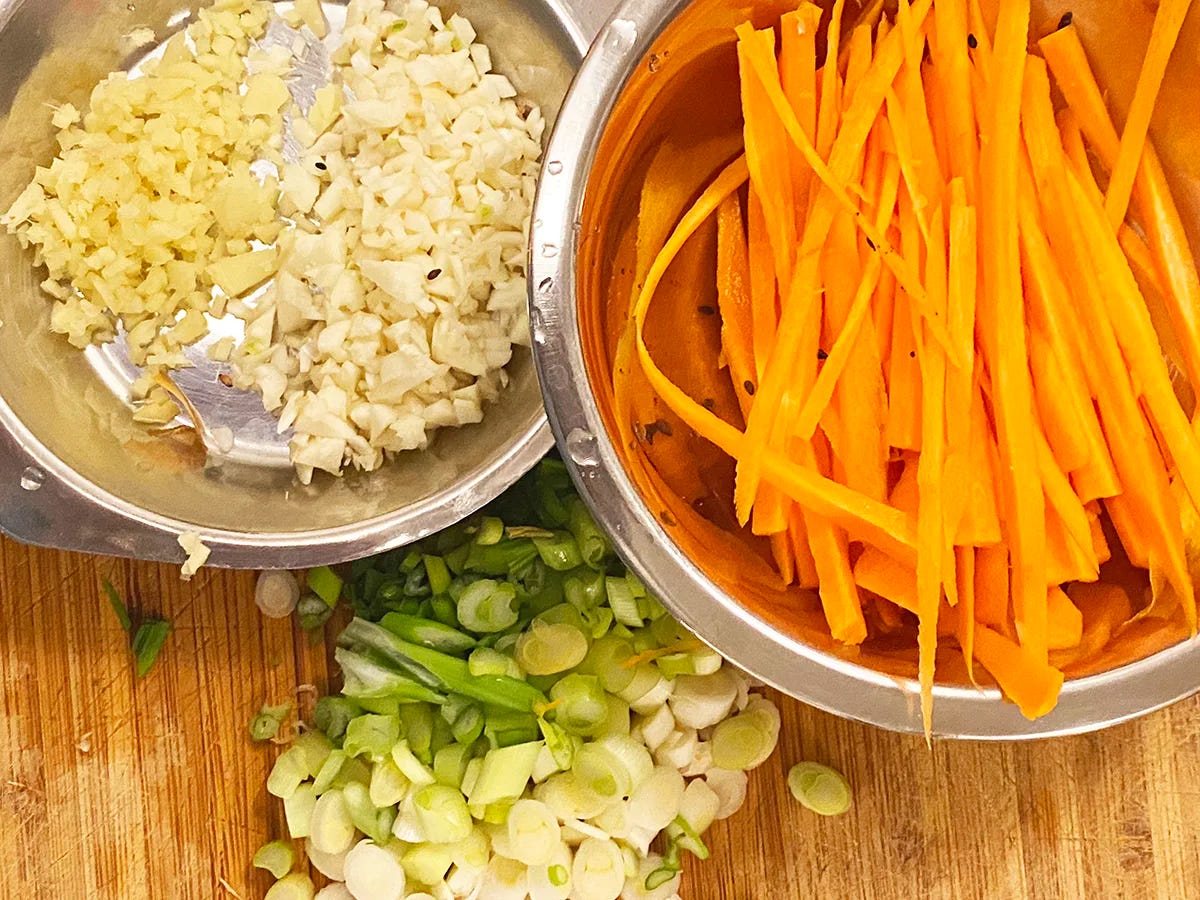
Finely chop garlic, ginger, scallions
Loosely chop cabbage
Julienne carrots
Toast sesame seeds but pay attention or you will end up doing this step twice after burning the first batch
Brown the ground pork and reserve
Simmer garlic and ginger in fat until fragrant, about a minute
Add cabbage, carrots, and scallions
Add soy sauce, vinegar, sesame oil
Add optional hot pepper
When cabbage and carrots are softened, add pork and stir
Taste and season
Serve over rice, top with sesame seeds and crunchy chow mein noodles
The Latest
The 2025 Italian Cookbooks
At Red Sauce America, I wrote about this year’s Italian, Italian American, and Italian-ish cookbooks.
Recipes In The Age of Artificial Intelligence
Allowing a computer to write a recipe is not a very good idea. What’s worse is when AI copies your cookbook and makes the recipes inedible. It happened to Adam Erace, who writes at Bon Appétit about testing the AI copy slop of his own cookbook, Dinner At the Club.
When Oranges Weren’t Orange
The bright orange citrus fruits we eat today weren’t always so orange. History Facts briefly looks back at the fruits — and finds some nice historic paintings of not-very-orange-oranges.
Christmas Yule Log Cakes
The French bake up bûche de Noël, a cake that looks like a tree log, for Christmas. Food & Wine looks into the tradition, and the chefs that elevate the barky logs into pastry art.
Hanna Lee Named Cheese Monger of the Year
Hanna Lee became the first American to win the title awarded in Bern, Switzerland.
Viral Cheese Pulling Becomes Essential Marketing
Its hard not to have seen at least one video of someone pulling stringy, melty cheese apart on social media these days. Stretchy cheese is catnip for food lovers on the algorithm platforms. And these viral videos are driving customers to restaurants. Jaclyn Diaz and Alana Wise at NPR look into how the video trend is creating a need for must-have items on restaurant menus.
Seven Fishes
There’s a lot of Feast of the Seven Fish stories out this week: Salon, Bon Appétit, San Diego Union Tribune, Pittsburgh Post Gazette, Inquirer.
Around The Stack
Devin Kate Pope trades seven fish for tamales.
Test, Taste Repeat looks at cheese.
Midwest Mexican examines the foods she ate during her year of unraveling.
Joshua David Stein starts listing the best things he ate this year.
Updates to the All The Best Things of 2025