

Food Notes: 3/10 Fajita Chicken Alfredo
Alfredo sauce, gamey meat, restaurant voyeurism, alligator okay for Lent, and a whole lot more

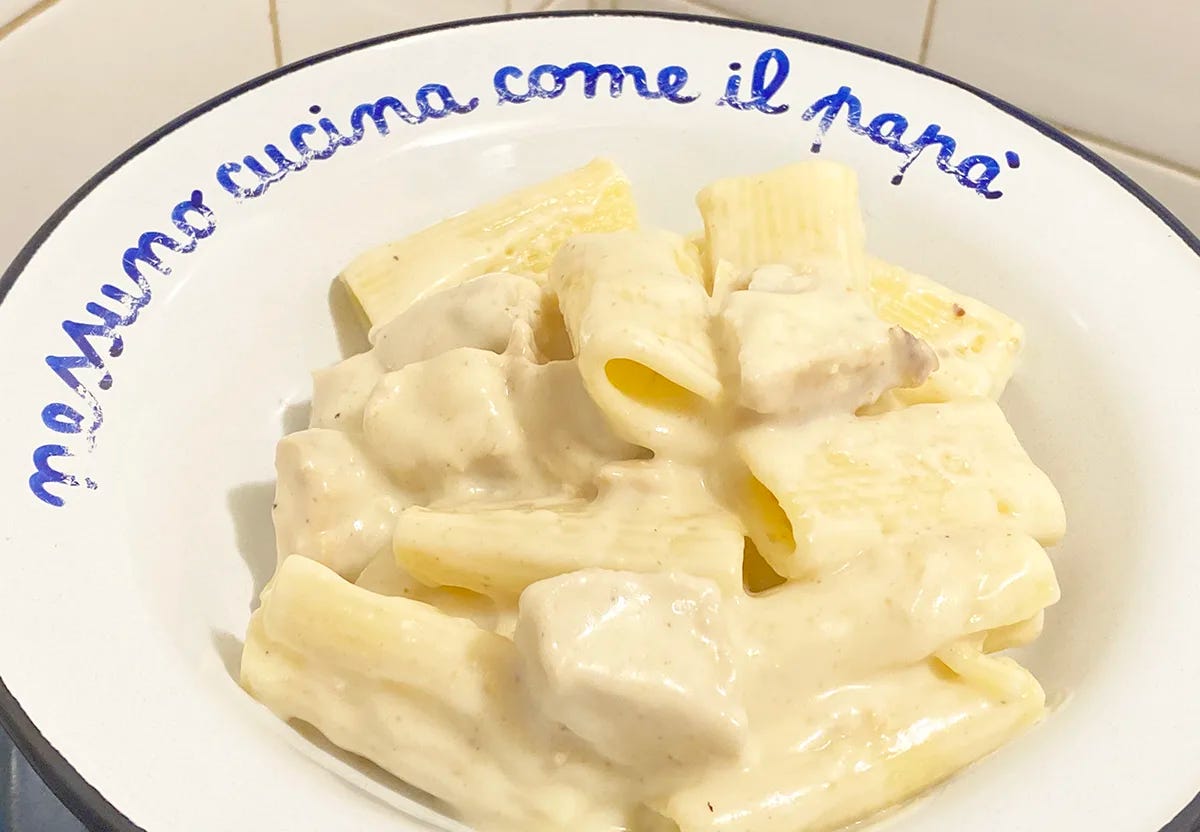
I had leftover grilled chicken and rigatoni sitting in the refrigerator so I decided to whip up an American-style Alfredo sauce for lunch.
The grilled chicken had been seasoned for fajitas the night before. Cumin, in Alfredo sauce? That’s crazy.
If you spend any amount of time on social media talking about food, you’re bound to come across two things: British people angry about Americans using the term “noodles” for pasta; Italians insisting Alfredo sauce is American. These two issues are oddly connected.
The original Fettuccine Alfredo was in fact created in Rome by a chef, Alfredo Di Lelio, around 1908. The simple dish of fresh egg pasta, butter, and cheese was an embellishment of one of the most basic pasta dishes served in Italy. Di Lelio was a showman though, and served his version tableside accompanied by music. But even with this touch of flare, Di Lelio’s dish doesn’t resemble the over-the-top Americanized sauce.
What Americans think of as Alfredo sauce – a creamy, gooey mess of cheese and milk, and cream – was a product of the convenience food movement in the post-war period. What made Di Lelio’s creamy texture was emulsifying the butter and cheese with the starch from the pasta. The dish lends itself to tableside service since it should be served immediately.
But post-war Americans wanted dishes that were easy. It was the dawn of frozen dinners and TV trays. It was an era of better living through the miracle of science and chemistry.
By the 1960s, the simple butter and cheese dish had been transformed. Perhaps the earliest version comes from the Pennsylvania Dutch Noodle company provided as a promotion for their egg noodles. The Alfredo sauce included processed cheese and heavy cream. Among other dishes in their promotion were recipes including chicken and dumplings and even lasagna. These added ingredients created a dish that had more volume, and was easier for unskilled home cooks to make.
And it is with this that we can see the reason Americans refer to pasta as a noodle. German immigrants – the Pennsylvania Dutch – settled in America joining the great melting pot of culinary influences. And the Germans were quite familiar with noodles, known in German as a nudel. How the British, with their German king missed this bit of linguistic history is a curiosity.
Meanwhile, American Alfredo sauce continued its evolution as processed foods became ever more popular. Soon there were frozen pasta dishes with alfredo sauce, packages of powdered sauce, and jars of creamy Alfredo. The term Alfredo came to signify creamy, like a béchamel.
I made this “Alfredo” sauce from scratch. I also knew my leftover fajita chicken would bring all sorts of extra flavor to this creamy dish — and that’s when I realized what the world needed as an in-depth look at the how and why this creamy mess had taken on the name Alfredo.
If I’ve piqued your interest in this history, I wrote up the longer form article over at Red Sauce America.
Fajita Chicken Alfredo And Rigatoni
(serves 1-2)
INGREDIENTS
2 Tablespoons butter
2 tablespoons flour
¾ cup milk
Dash Onion powder
Dash Garlic powder
4 oz white sharp cheddar
¼ cup fresh grate parm
1 cup fajita chicken
Leftover Rigatoni
INSTRUCTIONS
Melt the butter
Stir in the flour
Add the milk and simmer
Add spices, salt, and black pepper
Slowly stir in cheddar and parmesan cheese
When the sauce is smooth, add chicken and pasta
Stir until chicken and pasta are warmed through.
Serve immediately before the sauce turns into concrete
The Latest
What is “Gamey” Meat Anyway?
The first time I ate elk meat, the menu described it as “gamey.” It was a fine dining establishment with a delicate sauce, and to be honest I’ve had goat meat tacos with a stronger “gamey” flavor. But what the heck is that flavor anyway? Mark Hay at Popular Science examines why, and what the flavor actually is.
Alligator Okay for Lent
If you’re having a hard time giving up meat for Lent, even if its only Fridays, nows a good time to chow down on some alligator because the Church considers it seafood.
The Rise & Fall & Rise Again of Mel’s Diner
Concluding our mid-winter break in Southwest Florida, we ate at Mel’s Diner, a family-owned chain of diners along the west coast that has hosted both Joe Biden and Pete Hegseth. Today just four locations remaining, but at its peak, Mel’s boasted 11 locations across 120 miles. Here’s what happened.
Restaurant Voyeurs
It’s dinner and a show with the food prep as the entertainment. Over at Taste, Stephen Bradley examines how open-plan restaurant kitchens are changing the way things are done. I’ll say that I absolutely enjoy watching chefs cook dinner. The best experience was the Chef’s table at Beluga Loves You in Maastricht where we literally were in the kitchen.
The Prepping Pantry
With the specter of World War III on the horizon, more people are prepping for survival. Frida Garza suggests packing up a little treat, too, because who wants to live life with nothing by tinned fish?
Alison Roman’s Meatballs
Alison Roman went on the Today show to talk about her Goodbye Meatballs, which is a whole thing if you’re a follower of the Alison Roman universe, but the real story here is she’s friends with Lauren Graham of Gilmore Girls fame. Daytime TV is almost unwatchable, but Graham and Roman are charming.
High Food Prices Going Higher
If you thought food was expensive now, just wait until the rapidly rising cost of oil pushes them further. Bombing Iran doesn’t just mean higher gasoline prices. Petroleum is important to all sorts of products used in the food supply chain. Al Jazeera has a explainer.
Is Cottage Cheese Worth The Hype?
TikTok has been going wild for cottage cheese. The viral videos are even leading to shortages. But is it actually healthy? The Independent takes a look at some of those claims. Personally I never touch the stuff. A good ricotta on the other hand, and I’ll be eating by the spoonful.