

Food Notes: 4/14: Chicken Parmigiana aka Chicken Parmesan

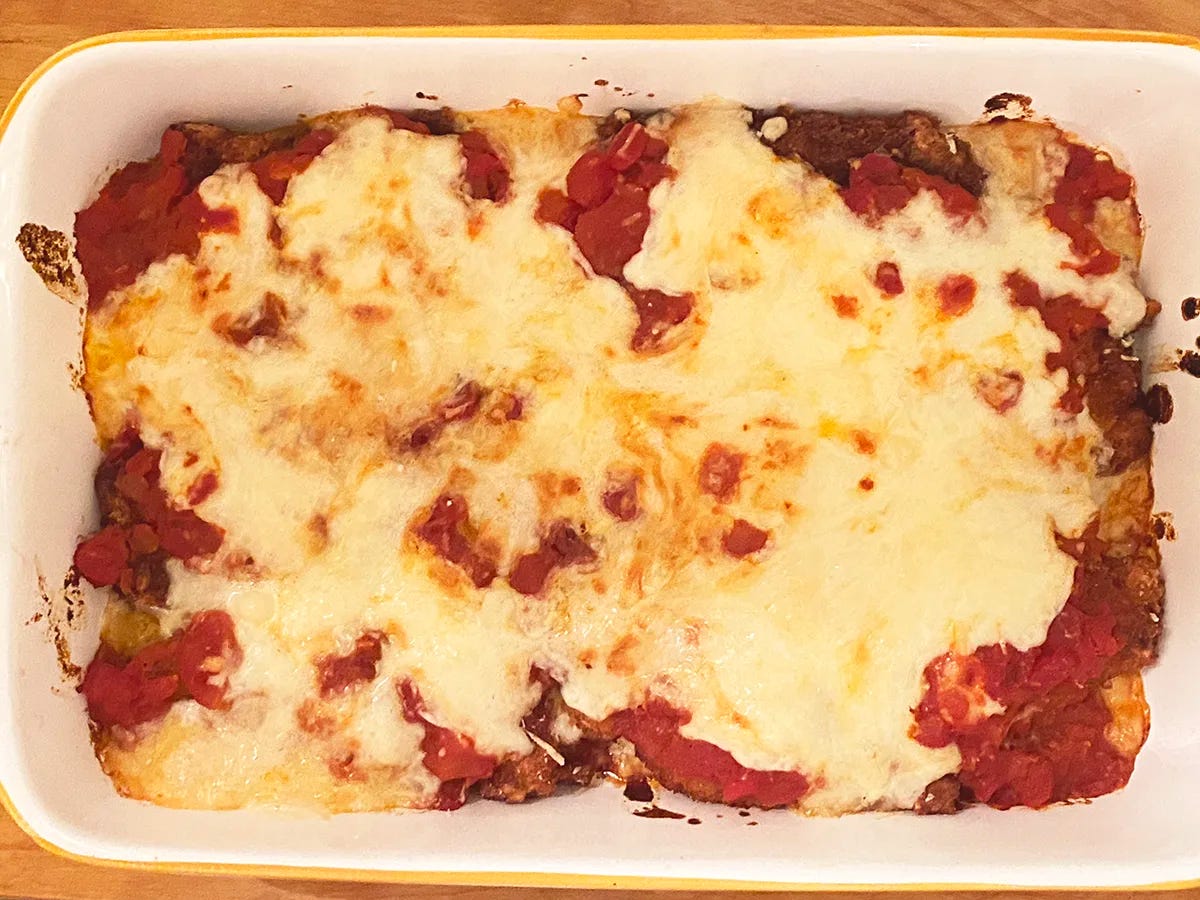
Last week was spring break for NYC school children, so naturally we fled the city for grandma daycare. And then I cooked up some chicken parmigiana.
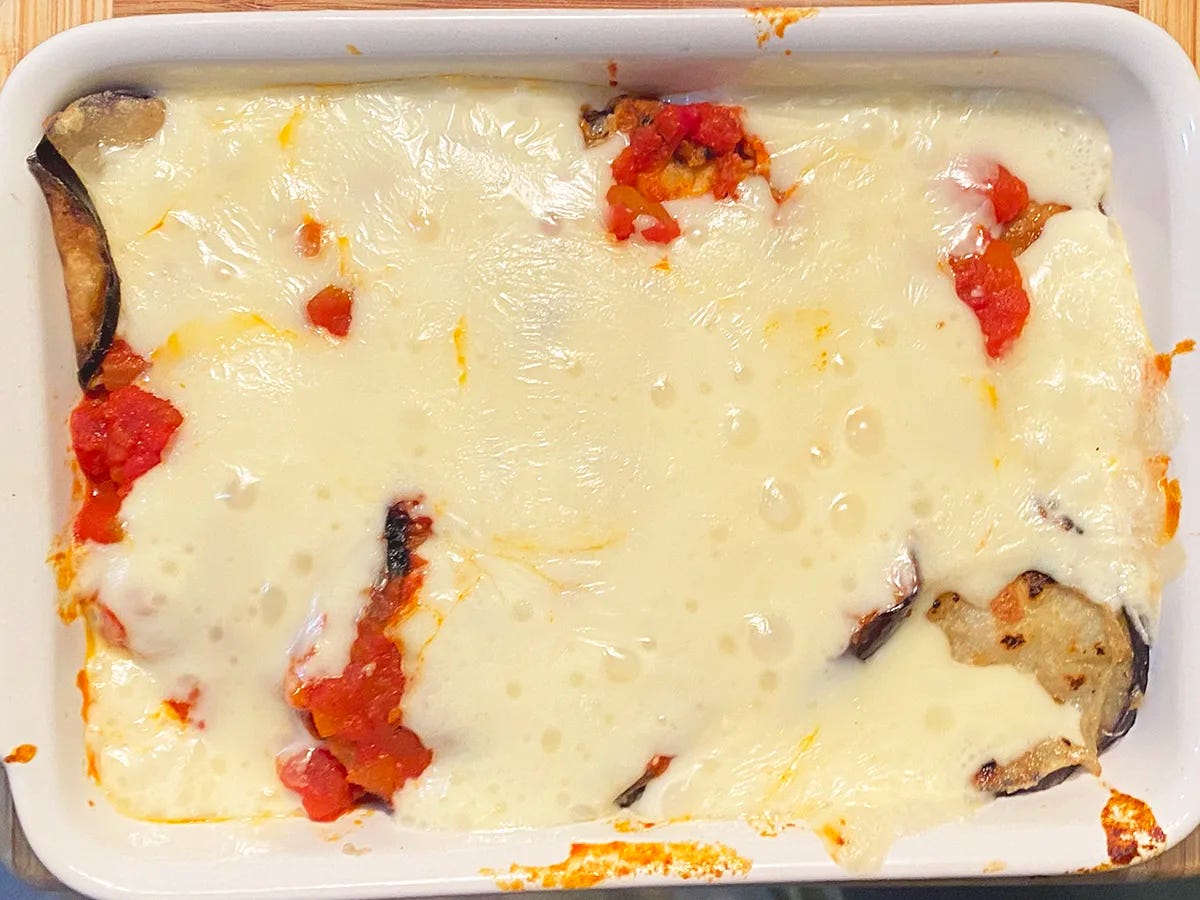
“Who else is coming for dinner?” my mother-in-law asked. I had two trays of chicken, a bowl of eggplant parm, and a big plate of fried cutlets that simply didn’t fit in any of the stoneware.
Chicken parm is one of those foods Americans ask for in Italy and are disappointed to find out actually comes from America. Chicken parmigiana, or Chicken Parmesan if you prefer, isn’t something that comes out of nowhere though.
In Sicily and the Islands around Naples, eggplant are a big part of the flavor profile, like Spaghetti Syracuse style. Melanzane alla Parmigiana is a historic dish, although the earliest iteration, bianca, was simply layers of eggplant and cheese cooked together. The tomato sauce was a later addition, but both the white and red version arrived with immigrants to the United States.
One common misconception is that the term parmigiana is not a reference to the cheese, Parmigiana-Reggiano. While you might make melanzana alla parmigiana with grated hard cheese, caciocavallo was more commonly used, and fresh cheese like mozzarella or fior di latte. However, the phrase parmigiana is phonetically similar to the word for shutter. The Italian word “persiana,” dates back to the 18th century, and in dialect, allegedly sounds even more like parmigiana. Slice eggplants lengthwise, and they begin to take on the appearance of the heavy wooden shutters used to keep out the hot sun.
Eggplant in the style of the window shutters arrived with Italian immigrants, and in the early 20th century in New York City, the eggplant was switched with veal. There are probably a few reasons for this. First, America was the land of abundance, especially compared to rural southern Italy where many people were starving. Meat was a delicious substitute.
Second, German food, especially schnitzel, fried pork and veal cutlets, had become a trendy food in New York City by teh 1920s. And third, Italian American cooks served up beef braised in tomato sauce, known as steak pizzaiola, which became much less common as veal parmigiana grew in popularity, suggesting it was displaced by the newer dish.
By the 1930s, Pietro’s, an Italian American restaurant in New York City was serving up a simple veal parmigiana. Diane Ashley’s Where to Dine in ‘39 highlights the recipe from the East 45th Street restaurant. In this version, fried cutlets have are topped with parmesan cheese and butter, before baked golden brown.
The Pietro’s version has more in common with the German-style schnitzel, but it’s also similar to the traditional Sicilian dish, melanzane alla Parmigiana bianca, the white version of eggplant parm baked without any tomato.
Veal was initially the most popular protein, and by the 1950s, common at red sauce joints. Other versions include shrimp, chicken, and zucchini. Yet today, chicken parm is far more prevalent as an entree, sandwich, and even pizza topping.
At least one version of chicken parm was invented in 1945 in Williamsburg, Brooklyn. Pasquale Bamonte, who founded the namesake restaurant in 1900, claimed to have been cooking eggplant parm for high school baseball players one evening when he ran out of the vegetable and swapped in chicken in its place. From there, chicken parm spread. How much truth is in this fairy tale is unproven, but also unprovable. More likely, as happened with Chicken Francese, more than one person developed a similar dish independently and now the recipe is a ubiquitous part of American culture.
Today chicken parm is undergoing a new evolution once again with the substitute of vodka sauce for tomato sauce. One version that has become famous is served on the FDNY hero from Anthony & Son Panini Shoppe. The sandwich is made from vodka sauce, chicken culet, and mozzarella cheese. But just up the street at Carmine and Sons, a pizzeria and red sauce restaurant, you can find chicken parmesan in vodka sauce under their specialty dishes.
When I set out to cook the chicken parm, I debated gathering the ingredients for a vodka sauce base. At one point I even had a bottle of heavy cream in the cart. Was this too much change? Would we survive this unexpected recipe plot twist? At the last minute I decided to error on the side of caution and keep it traditional, or at least traditionally Italian American.
To make the above chicken parm, I pan fried cutlets battered with flour, egg, and panko bread crumbs, and then combined them with a simple tomato sauce and low moisture mozzarella cheese before baking them at 350F for about 20 minutes. It’s important to bake them in stoneware as glass dishes like Pyrex are more likely to burn the underside of the chicken.
There isn’t much to the recipe, though it is labor intensive. If you’re feeling historical, try this vintage recipe adapted from the Diane Ashley book, Where to Dine in ‘39.
Pietro’s 1930s Veal Parmigiana
INGREDIENTS
Veal cutlets
Flour
Egg
Breadcrumbs
Parmesan Cheese
Butter
INSTRUCTIONS
Pound the veal flat
Cover in flour
Coat in egg
Cover in breadcrumbs
Fry in olive oil
Sprinkle liberally with Parmesan cheese
Add bits of butter
Bake until brownPound the veal flat
Cover in flour
Coat in egg
Cover in breadcrumbs
Fry in olive oil
Sprinkle liberally with Parmesan cheese
Add butter
Bake until brown
The Latest
We Had Lunch Sami’s Kabab House
A favorite of Mayor Mamdani, Sami’s Kabab House serves of Afghani cuisine in Astoria. We had appetizers and kababs.
Froyo Is Back, But This One Is Scam
Frozen Yogurt is making a comeback this year with lots of new spots opening. Meanwhile, Cremily, a Froyo company hawking “French frozen yogurt billed as a healthy, lactose-free treat,” was just a scam.
With Good Bread
Caity Weaver dives into finding the best * free * restaurant bread in America, literally asking the question: what is the point of this article? Unsurprisingly, the cheddar biscuit industrial complex doesn’t want her snooping around asking her questions. The Red Lobster publicity team highlights a textbook case of how not to do strategic corporate comms (or was it 4d chess the whole time?). Anyway, Weaver continues fearlessly into the search for the best bread in an epic Odyssey that had me pouring over photos from the dining room of Bone’s, an Atlanta restaurant, that as of this article is best known for having tiny soda cups.
Fancy Cheese
Kraft announced three new flavors of Kraft Macaroni and cheese targeting the upscale market including Parmesan Pesto, Monterey Jack Caramelized Onion, and Romano Cacio e Pepe, and perhaps proving that Cacio e Pepe is the new Alfredo.
I Can Believe It’s Butter
Butter obsessives are traveling the world searching for the best butter.
California Looks to Ban PFAS Spray
Since Americans aren’t ingesting enough forever chemicals from their nonstick pans, the current administration approved spraying PFAS chemicals as pesticide. Now California’s legislature is looking to restrict the chemicals usage, which is good for everyone given how much produce comes from the state.
Space Food
Joy Saha at Salon reports on the space-age menus aboard Artemis II. It’s no tea, earl gray hot, but beef brisket sounds pretty good.