Food Notes: 4/21 Pasta e Ceci
Pasta with chickpeas, artichokes, spying pasta sauce, and more

The Gordon Ramsay cooking competition show Hell’s Kitchen premiered in May of 2005, at the height of turning everything into a reality show. In the opening challenge, Ramsay’s sous chefs task the contestants with cooking their signature dish, “A dish that says something about who you are.” The contestants had 45 minutes.
“This is something that should reflect you,” the second sous chef calls out.
Hell’s Kitchen was powered by personality clashes and interpersonal dramas with the food coming second to the manufactured conflicts. Ramsay’s public persona twenty years ago was built around cruelty in the kitchen, particularly as the loud, abusive chef on the competition show. He held nothing back, spitting out most of the dishes presented to him.
This first challenge is one that is repeated in subsequent seasons. Surprisingly, few, if anyone, seems to have learned a lesson from earlier seasons and repeat the same mistakes, and make new ones, like attempting fresh pasta with too little time (a frequent problem for chefs across competition shows like Chopped and Top Chef as well).
All this is a long way of getting around to saying obviously I’ve fantasized about what kind of dish represents me, and what would I cook with for chef Ramsay in an opening challenge of Hell’s Kitchen.
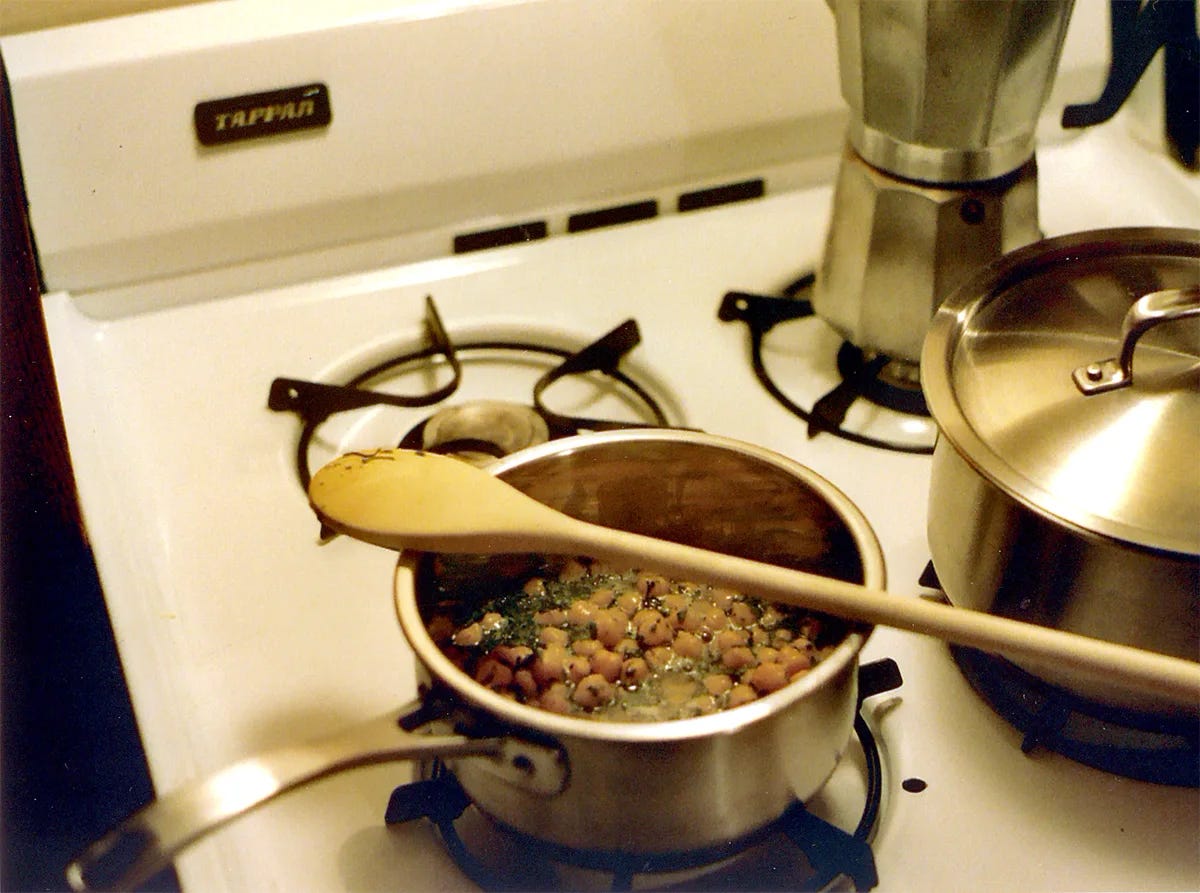
The conclusion I came to many years ago is that I could make a simple macaroni with chickpeas, pasta e ceci.
Chickpeas are an ancient food, with some suggestions humans have been eating them as far back as 10,000 years. Wild versions of the plant likely originated in southern Turkey and Syria, where it was eventually domesticated. The legume then spread across the Mediterranean and became a staple crop across the region.
Pasta e ceci is a dish with many variations across southern Italy. Some form of pasta and chickpeas have likely been around since the Roman era. Regionally, recipes vary in Italy, but a common version from the Basilicata region is known as the “Brigand’s dish,” a piatto del brigante.
In Calabria, Lagane e ceci is associated with St. Joseph’s Day, and shared among neighbors. Lagane are a broad flat pasta shape like taglietelle. In Puglia, the dish is known as ciceri e tria. Tria derives from the Arabic Itriyah and the Greek Itriom, indicating threads of pasta.
It’s also one of the first dishes I have a memory of eating. My mother would make it with tiny farfalle, little egg noodle bowties that have in recent years become more difficult to find in the grocery store.
I’ve also made = variations of the dish over the years. The base dish begins with garlic, olive oil, and chickpeas cooked with parsley and black pepper before mixing in the pasta. But I’ve versions where I’ve mixed in medallions of carrot, or wilted spinach, or green peas. If you’re desperate for meat, starting off with a bit of pancetta never hurt anyone. Some people turn this into a tomato-y dish too, but I don’t go in that direction.
My preference is cooking down the liquid and mixing in the pasta to absorb all that flavor, but also there’s nothing wrong with adding extra broth and making a soup. One key ingredient though is finishing it off with a bit of parmesan.
I recently cooked up a version for lunch. My wife was skeptical at first, which is unexpected given that she’s a proponent of the mantra, “daily beans!” I must have done a decent job, but because earlier this week when I cooked up another batch at lunch, she wanted in.
Pasta e Ceci (Ian's Version)
INGREDIENTS
Large can of chickpeas (when did the 32 oz become 19 oz?)
Two big splashes of olive oil
3 to 5 cloves of garlic
1 tablespoon butter
A few tablespoons parmesan
Dash of dried parsley (or fresh Italian Parsley finely chopped)
A few shakes of black pepper
Pinch of crushed red pepper
½ lb of Mini egg bowties (mini shells, mini elbows, or ditalini also works)
INSTRUCTIONS
Boil water for pasta
Finely dice garlic
Saute in oil
Drain chickpeas reserving a tablespoon of x
Add chickpeas to the garlic and oil
Add butter
Add aquafaba
Add tablespoon or two of water
Season with salt, pepper, red pepper, and parsley
Simmer
Cook chickpeas until tender
When most but not all of the liquid has evaporated add in the pasta
Stir in grated parmesan so that it melts into the oil and coats the pasta and chickpeas
Serve with additional parmesan
The Latest
Searching for the Joy of Cooking
Have you seen the latest food hack? It’s probably an influencer trying to make cooking faster, quicker, simpler. Social media is driving a renewed interest in convenience cooking, a results driving approach that overlooks process. But cooking can be fun, argues Jaya Saxena over at Slate, where she looks at the newest trend of finding joy in the act of making food.
The Sauce That Spies on You
Jarred tomato sauce brand Prego is launching a device to record your dinner conversation. The intent is far less sinister than it sounds. Working in conjunction with StoryCorps, the device is meant to record family stories, presumably while suckling on spaghetti topped with tomato sauce.
What Is A Steakhouse Anyway?
The steakhouse is a truly American creation that defined early restaurant dining in this country. The best ones typically come with a storied history. But now we’re seeing something different, says Bettina Makalintal at Eater, a new kind of American steakhouse, one where there is steak, but also a celebration of other immigrant cuisines. She posits that the new steakhouses are making a comeback generally because of a cultural moment where two competing ideas thrive in their dichotomy. Conservatism likes red meat. But also immigrants have given us delicious foods, and these two ideas can coexist simultaneous in the safety of a meat palace.
Everything Old Is New Again
Fernando’s, the 120-year-old Italian restaurant in Brooklyn that closed last year, is open again thanks to the team behind Cafe Spaghetti. The dishes have been updated, including the signature pane e panelle, a sandwich made of chickpea fritters, but it’s all been done with the blessing of the previous owners.
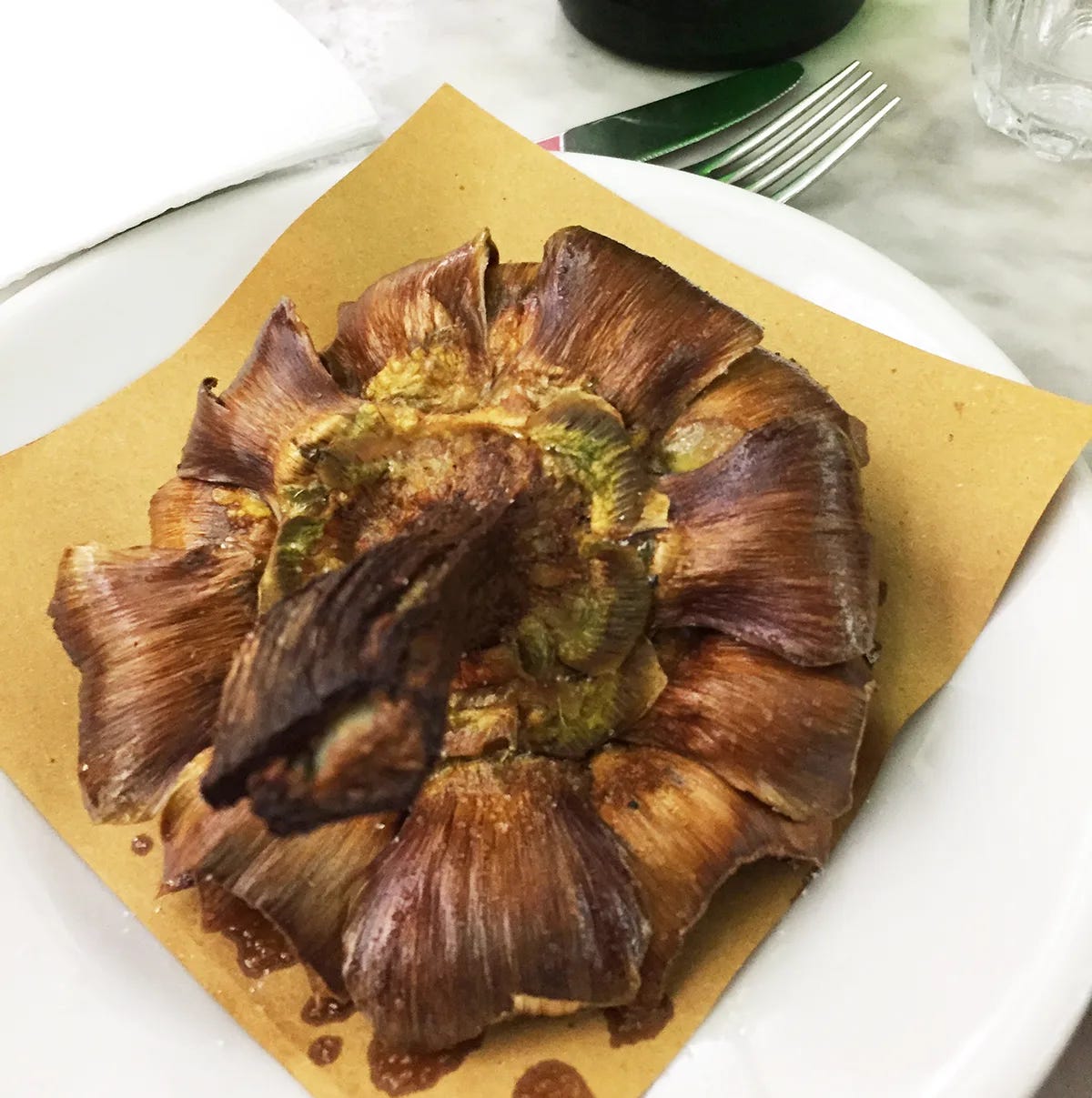
The Best Artichokes
Food & Wine examined all some of the ways to cook whole artichokes, and decided classic steaming them is the best way. Great news. I have a great version of garlicky steamed artichokes that shows up on the Christmas dinner table. But I’m going to say the best way to cook whole artichokes is actually in fact, deep fried from a pizzeria in Rome.