

Food Notes: 4/28 Nathan's Famous
Hot dogs, corn dogs, crinkle cut fries, vodka sauce, potatoes, and more

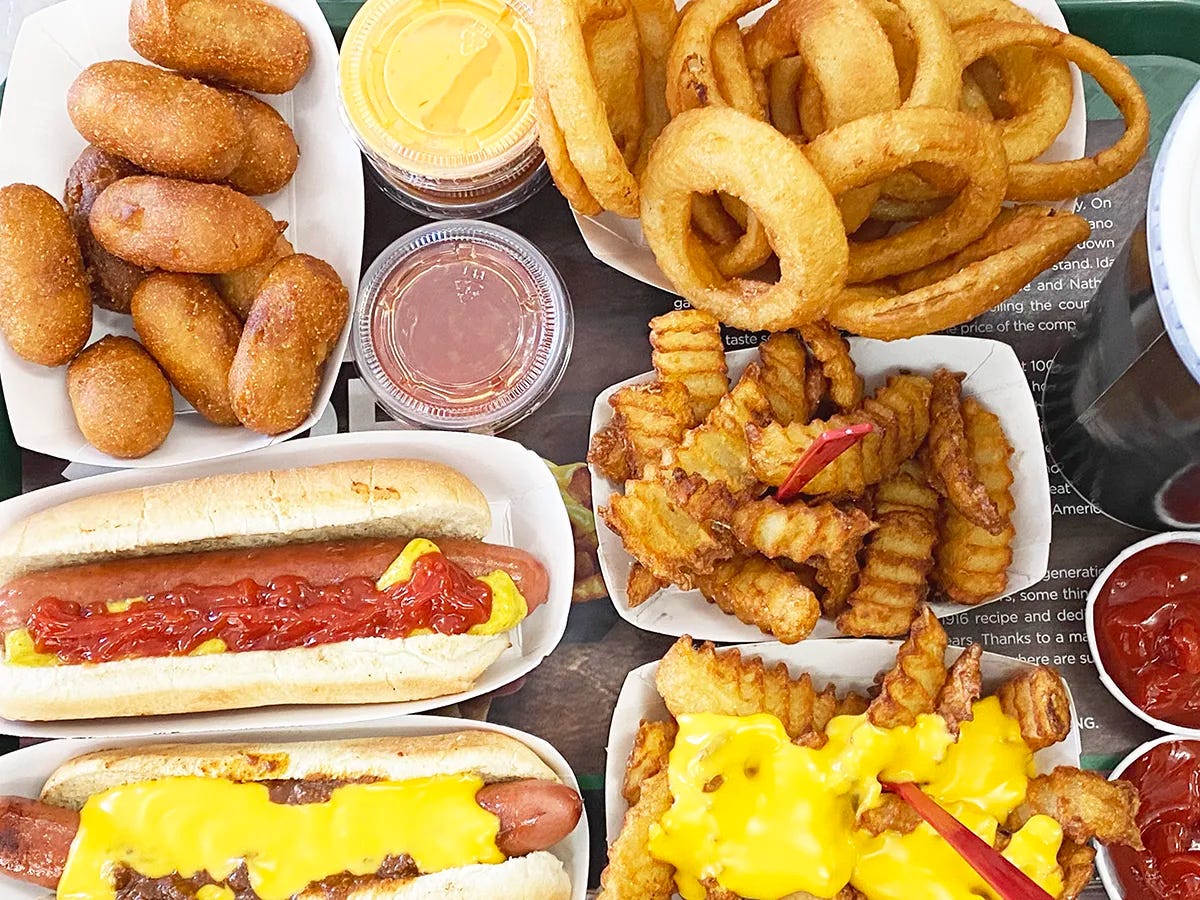
We headed out to Coney Island for an off-season adventure. Obviously, our first stop was Nathan’s Famous hot dog stand.
Coney Island has served as a summer, seaside destination for New York City since the early 19th century. The amusement park rides that have created the neighborhood’s iconic culture first started appearing at the end of that century with places like the Sea Lion Park that opened in 1895, and the original Luna Park opening in 1903. The early parks dazzled with electric lights and mechanical rides. Seasonal visitors arrived by steam trains. But the modern Coney Island was really born in the second and third decade of the 20th century.
The BMT arrived in 1918, and the massive Coney Island Stillwell Avenue station, the gateway to Coney Island, opened in 1920, as did the Wonder Wheel. Other iconic skyline pieces followed like the Boardwalk (1923), Cyclone roller coaster (1927), and Parachute Jump (1941).
In hindsight, Nathan Handwerker’s decision to open a hot dog stand on Surf Avenue in 1916 was a brilliant business play.
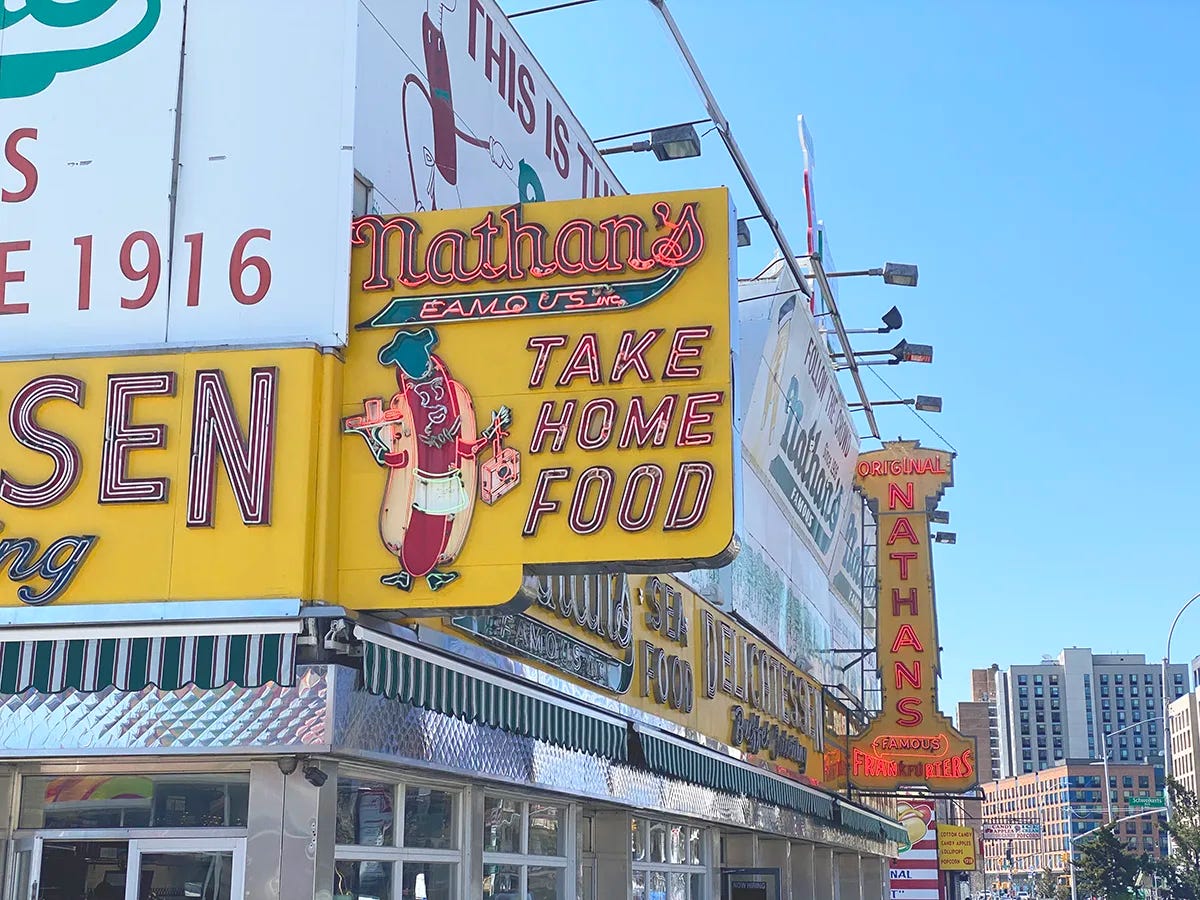
An immigrant from Poland, Nathan Handwerker gave up a steady job to operate the new hot dog stand. He secured the corner lot with a loan, and buitl an empire.
His success though was more than just a good location. For instance, unlike other businesses on Coney Island, the Nathan’s stand operated all year long, so even after the summer day trippers left, Nathan was still there selling hot dogs.
Nathan’s also innovated in marketing. He undercut the nearby Feltman’s, which sold 10 cent dogs. Nathan sold his for 5 cents, earning less on the hot dogs but driving business to items like fresh lemonade. He also reduced waste by investing in ice and then refrigeration to prevent the dogs from spoiling.
Another significant choice was to commit to high quality hot dogs. Nathan’s serves an all beef hot dog and created a custom blend of higher quality cuts. Feltman’s, on the other hand, served a pork dog.
Nathan’s hot dogs were also wrapped in natural casings. Meanwhile, in Chicago, hot dogs without casings were introduced in 1922 and were cheaper to produce. The different production methods have remained regionally significant ever since.
And because Nathan’s custom ordered their meat, Handwerker was able to deploy other marketing strategies like serving bigger dogs on Memorial Day and Fourth of July weekend, the opening of the season, and creating the belief that the Nathan’s dogs were larger all summer long.
Perhaps the best known marketing ploy created by Nathan’s Famous is the annual hot dog eating contest, first launched in 1972. The televised eating contest draws contestants from around the world, building brand awareness for the Nathan’s empire.
After the success of Nathan’s Coney Island location, the Handwerker family launched several other restaurants. Nathan’s son, Murray, pushed for a Long Island location in the 1950s following their customers into the suburbs. They opened another location in Yonkers that struggled, in part because it was not a destination for tourists. The company went public in the 1960s, and opened a Times Square flagship store.
The trouble was that by the 1960s, Nathan’s was competing in a fast food market, and even though competitors were relatively new compared to the 50-year-old Nathan’s, they were also more efficient serving cheap, fast food. To address the issue, Nathan’s began offering franchises hoping to capture that fast food market.
The move toward a fast food model was solidified during a merger with Wetson’s, a fast food burger chain. The 1975 stock swap deal saw the Wetson’s stores converted to Nathan’s brand, and Nathan’s locations that were less favorable to the fast food model shuttered. In the years since, Nathan’s franchises have seen ups and downs, particularly as shopping malls where many franchises were located, have closed down.
In January, Smithfield Foods announced a total acquisition of Nathan’s. Smithfield had been manufacturing Nathan’s hot dogs for grocery store customers under license since 2014. While that license was set to expire in a few years, Smithfield’s $450m acquisition ensures brand access in perpetuity.
Ever since the announcement, I’ve worried that the new management team would gut Nathan’s classic store. Whenever new investors buy up a storied brand, they usually want to see changes made that cut costs or increase profits, none of which is ever good for consumers or product enthusiasts.
The Coney Island location has always served up a much larger menu than can be found at Nathan’s franchise locations. The franchise focuses on traditional fast food sandwiches, burgers, hot dogs, and the famous crinkle cut fries. But the Coney Island location has much more, including a seafood menu. The addition of seafood was another innovation Nathan Handwerker had made back before his restaurant would have been considered fast food.
The menu on Coney Island still includes clam chowder and lobster bisque and fried seafood platters with flounder fillets, clams, and shrimp, and fish sandwiches. But one of my favorite snacks from Nathan’s are the corn dog nuggets. These tiny corn dogs are bite-sized versions of the carnival treat.
It was too cold and windy to eat at the outside tables leading up to the beach, and despite the chilly afternoon, the inside seating at Nathan’s was nearly full. Later I realized patrons were being bused in as part of a tour, but still, it was surprising to see a full dining room off season.
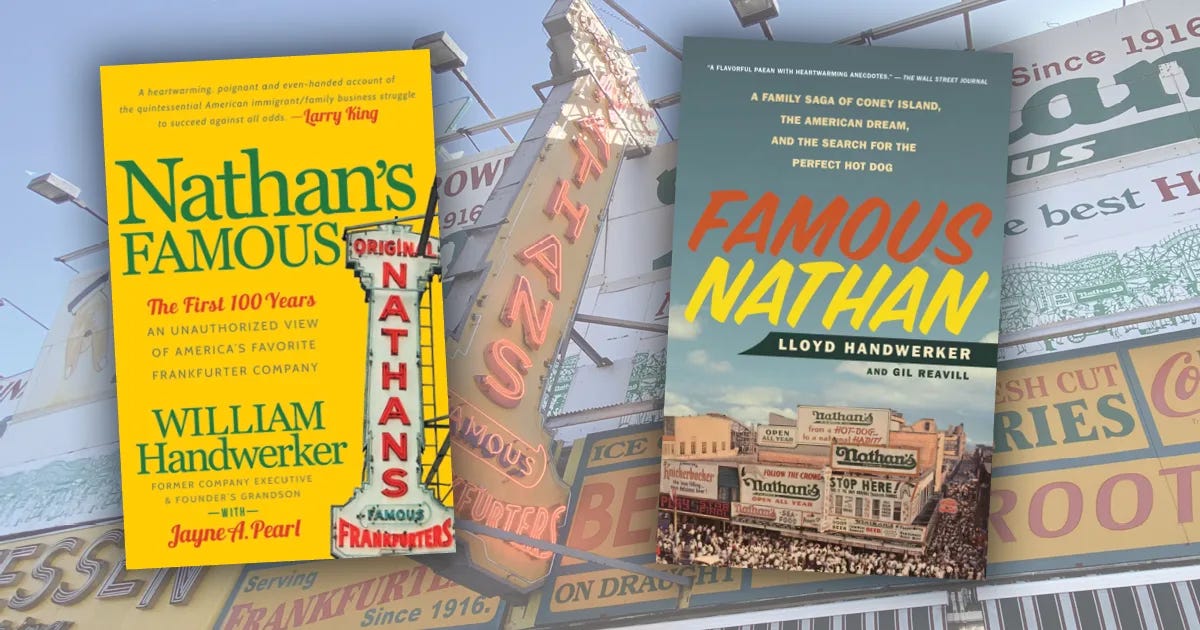
Believe it or not, there are actually two books about the history of Nathan’s, both co-written by grandsons of the Handwerker family. Lloyd Handwerker’s memoir Famous Nathan and Wiliam Handwerker’s cultural history, Nathan’s Famous, offer two perspectives on the rise and fall and rise again of the restaurant, the offshoots, franchises, and grocery store hot dogs.
The Latest
Vodka Sauce Is Trending, Again
The kids all love vodka sauce. Everyone is abuzz, especially Gen Z, on the creamy, spicy, alcohol infused tomato sauce. Chloe Mac Donnell at the Guardian explores the trend, and I weigh in.
You Say Tomato, I say Potato
If you’ve ever wondered where potatoes come from, you might be surprised to learn they come from tomatoes. Some 9m years ago, a proto-tomato met up with an early tuber like plant and made a hybrid plant baby that evolved into the potatoes we eat today.
There’s No Beating the Bean Man
Lesley Sykes at Eating Patterns discusses the Rancho Gordo effect — the idea that one company comes to dominate a market segment they become untouchable. Sykes has her own bean business, and looks at how Steve Sando created the category, and has become untouchable by being great.
Twisted Pretzel History
Apparently, earlier this week was National Pretzel Day, a holiday invented to sell soft pretzels. At Salon, Joy Saha goes into history of the salty snacks.
Everyone Loves Thighs
The chicken thigh was one the cheap alternative to white meat, but too many people have caught on to the flavorful meat. Danny Palumbo, writing over at Slate, takes a look at why we’re suddenly excited about chicken thighs.
CO2 Is Making Food Less Nutritious
Carbon Dioxide isn’t just making the planet warmer. It’s also making crops more sugary and carry less of the critical nutrients we need. Oops.
Thank you for the feature! Right alongside some fun Coney Island history.