

Food Notes: 6/23 Pico de Gallo
I make a salsa, Olive Garden's cheese secret, Americanizing food, and more

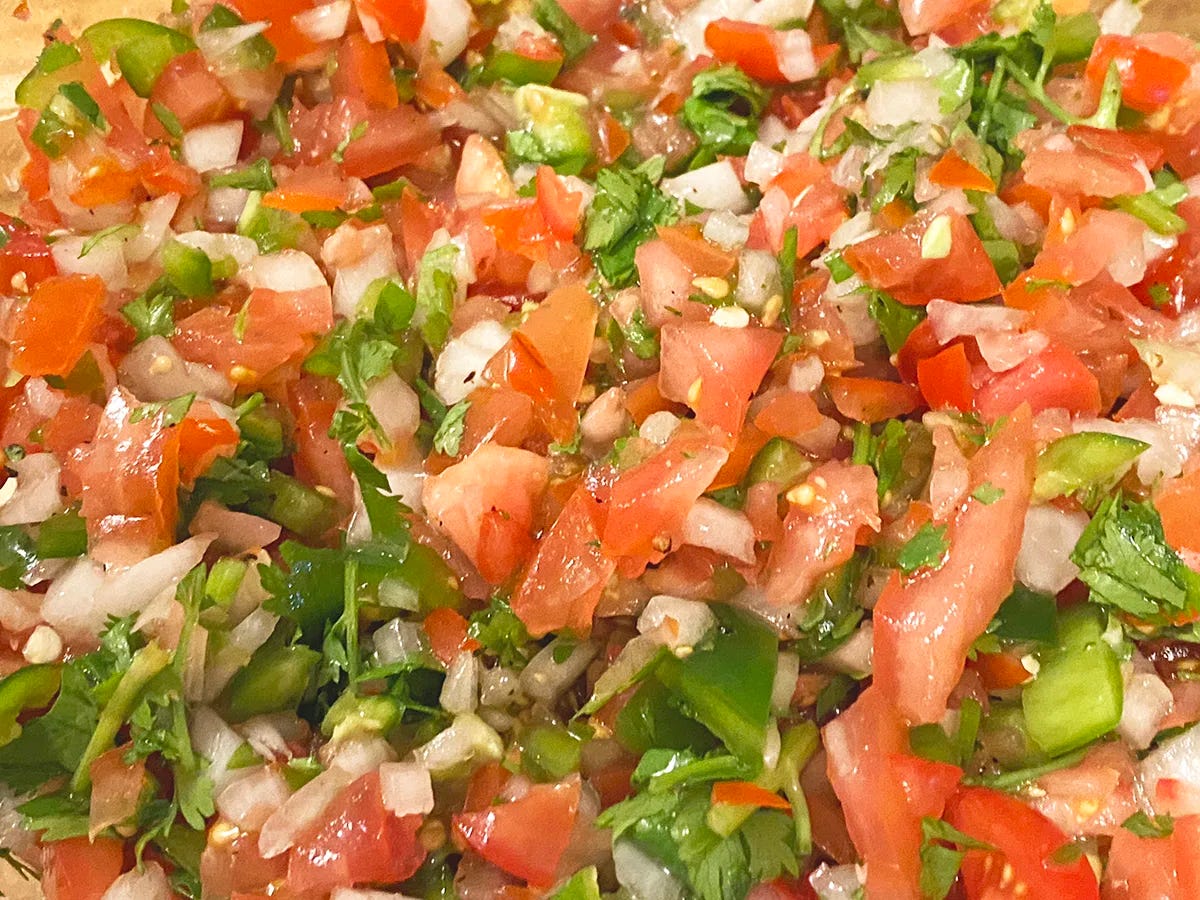
It was Taco Monday so naturally I decided to make some fresh pico de gallo
One problem: It’s not really tomato season. Luckily there’s other strong flavors in pico de gallo, so we don’t need the perfect tomato. Normally I shy away from eating tomatoes out of season, but actually using delicate garden tomatoes in a salsa like this might be a waste of a sweet tomato.
Garlic, onion, hot peppers, and cilantro all contribute a flavor punch that overwhelms the subtleties of a good tomato. Besides, the lime juice helps soften them, even if the tomatoes are rock hard.
Tomato-based salsas date back to Aztec-era Mexico. Their work cultivating the fruits created the tomato as we think of it today (although more orange and yellow than red). The marketplaces in the Aztec city of Tenochtitlan were filled with vendors selling salsa when the Spanish invaded. Unfortunately, teh Conquistadors ended up destroying or neglecting many of the recipes originating in that era, including the medicinal products.
Pico de Gallo is a type of fresh salsa, salsa fresca and raw salsa, salsa crude. It’s just chopping up the vegetables and combining them. There’s a simplicity in the recipe, but like so many dishes that seem simple, their creation are much more complicated.
While Pico de Gallo may be related to the fresh salsa made by the Aztecs, the recipe is distinctively a product of the Columbian Exchange. One key ingredient, cilantro, originates in the Mediterranean basin. The herb, cilantro, is the leaves of the coriander plant, and is thought to have its origins in the middle east. Coriander and cilantro only arrived in the Americas in the 1600s, so although its common in Mexican cuisine today, it’s a relatively recent addition.
The recipe for Pico de Gallo salsa is mainly credited to Sonora, Mexico. The Mexican state sits along the border of the southwest United States. But while it feels like one of those dishes that has been around since the dawn of civilization, it’s introduction into American cuisine is much more recent. The earliest recipes in American media that I came across are from the late 1970s and early 1980s, mainly in Texas.
Some of the earliest references to the salsa are not as a dip for tortilla chips, but as a topping for fajitas. A 1984 menu advertisement from Bonita Steak Ranch in Chula Vista, California lists pico de gallo as a topping for sizzling fajitas. A 1987 article, “The Most Requested Recipes,” from the Ladies’ Home Journal, includes a fajita recipe and simple version of pico de gallo to go with it. Other restaurant ads pair the salsa with fajitas and guacamole.
A 1984 article on fajitas from Paris, Texas, refers to Pico De Gallo as “Texas Hot Salsa.” At the time, the cilantro may have been one of the more difficult ingredients to acquire. The article notes Cilantro is also known as “Chinese Parsley,” and suggests substituting Italian Parsley if no cilantro is available.
So why was nobody eating chips and salsa? In a 1977 Red Book an article, “Keeping The Old: A Celebration At Norma And Marino De Leon’s,” there is a reference to tortilla chips and pico de gallo, referring to it as a “spicy fruit appetizer.” But Americans still weren’t snacking on tortilla chips with salsa yet. The nacho had only just been invented in 1943, and Tostito’s weren’t brought to market until 1981. The idea of tortilla chips and salsa was something Americans had to learn.
Today, pico de gallo is a standard condiment for tacos, burritos, nachos, fajitas – ant dish really with some kind of connection to Mexican, Tex-Mex, Baja-style, or Cal-Mex cuisines. But it wasn’t always.
It’s worth noting that there will certainly going to be examples of home cooks making pico de gallo outside of these broad general timelines. And to some extent, there might be examples of pico de gallo showing up in newspapers or magazines that aren’t included in the databases I referenced. But generally speaking, it appears safe to say that pico de gallo really is a recipe that entered into American culinary traditions in the 1980s.
One more thing worth mentioning is the term itself and the direct translation to rooster’s beak. Dating back to the 1970s articles there are references that the phrase comes from the shape of the serrano pepper. There’s also an actual pepper known as the pico de gallo, identified in The Field Guide to Peppers by Dave DeWitt and Janie Lamson. It’s long and thin.
However, while this is a long held mythology that follows pico de gallo around, there’s no real agreement. Other claims include one by food writer Sharon Tyler Herbst who suggested the phrase describes eating the salsa with hands by pinching two fingers together. Rick Bayless and Deann Groen, authors of Authentic Mexican: Regional Cooking from the Heart of Mexico, suggest the finely chopped salsa looks like bird food.
Personally I suspect it has more to do with pepper shape than anything given the numerous references over the course of fifty years.
Pico de Gallo (Ian’s Version)
INGREDIENTS
4 to 5 vine-ripened tomatoes
1 to 2 white onions
2 jalapeños
1 serrano
1 lime
1 bunch of cilantro
Olive oil
INSTRUCTIONS
Finely chop the tomato and onion
Add an extra tomato if there is too much onion, about 60/40 in favor of tomatoes
Finely chop peppers; you can control the heat by limiting the amount of seeds you include
Finely chop the cilantro and toss
Salt and pepper to taste
Squeeze the juice from one lime and stir
Squirt a splash of olive oil in there for texture and flavor
Allow to sit for 15 to 20 minutes for it become juicier
The Latest
Who Would Have Guessed Olive Garden Wasn’t Sprinkling Parmesan
Olive Garden’s liberal application of grated cheese to pasta is unsurprisingly not the expensive Parmigiana Reggiano you might expect. Its not even Wisconsin Parmesan. But in actuality, its not as bad as this headline makes you think — its just a Romano cheese, a lower cost product, from the Lotito brand.
How Does Food Become American?
Historian Ashley Rose Young looks at how ethnic enclaves began influencing American cuisine, and how their recipes became part of the national American menu. She has a new book Nourishing Networks: The Public Culture of Food in New Orleans that looks at how food shaped the culture of New Orleans. Somehow in the bon appétit article, she avoids any mention of spaghetti, which as you may have guessed, I take personally.
The Taco Road Trip That Will Get You To Drive to Texas
Taco-king José R. Ralat lays out an itinerary at Texas Monthly for some of the state’s best tacos.
Philly’s Iconic Foods
I guess they couldn’t find 250 foods for the 250th anniversary, but they did find 76. The staff at the Philadelphia Inquirer lists off the foods to eat when you’re in the city of brotherly love.
Yellow Mustard Taste-off
Food & Wine tasted different yellow mustards to find the best one, which is incredible because the best one is actually dijon mustard.