

Food Notes: 1/27 - A History of Cavatelli and Broccoli
Broccoli, cavatelli, soup, noodles, pasta, macaroni, pumpernickel, psychedelic mushrooms, and more!

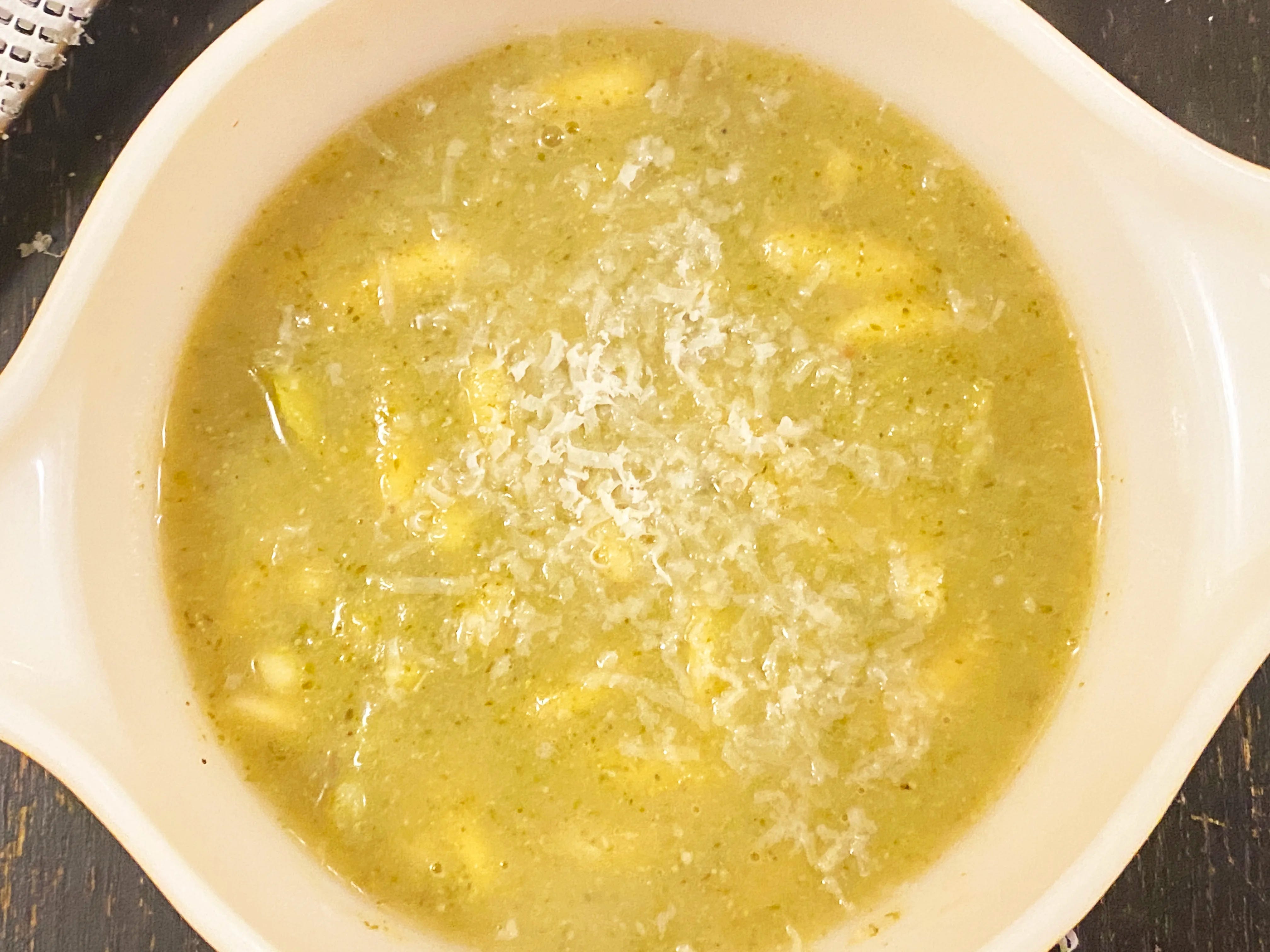
I was flipping through Soupified by Michele Di Pietro, and her Cavatelli with Broccoli Soup looked great. So of course I didn’t bother following the recipe.
Last week I mentioned attending the Italian American Future Leaders Conference where numerous Italian Americans were brought together to discuss the future of our shared heritage. That’s when I met Mangia with Michele creator, Michele Di Pietro.
Michele slipped me a copy of her book, Soupified: Soups Inspired by Your Favorite Dishes. Its a practical recipe collection that deconstructs dishes and turns them into soup. In the not too distant future, I plan on sitting down with Michele for a chat about Italian American food, her recipe collection, and food generally, but that’s TBD.
But I wanted to flip through the book while it was still fresh in my mind, and that’s when I landed on a recipe for Cavatelli and Broccoli Soup. Her recipe offers a soupified version of a classic dish I grew up eating — cavatelli with broccoli. The dish is similar to the broccoli pasta my wife often makes, like later tonight, and staple recipe in our household. So turning it into a thick, creamy soup seemed like an obvious good decision.
Cavatelli are pasta made by curling a flatting pasta dough forming half curled noodles (for controversial opinions on the term “noodle,” see below). According to the Encyclopedia of Pasta, it was originally made using the flour of milled fava beans, and sometimes grano arso, a wheat that is cooked or charred before milling.
Its quite possibly one of the oldest shapes of pasta, formed right after the invention of the lasagna noodle. It’s a stretched pasta, meaning the way the shape is made is by stretching it. A flat shape is placed on a textured surface, and the dough is stretched with a finger and to create the curl.
Cavatelli are known by many names across Italy. Its often served with whatever the abundant vegetable of the region is, but also with meat and.
Typically I end up buying cavatelli as fresh pasta or frozen pasta rather than as dried macaroni, though there are some brands that produce a dried version.
Cavatelli and broccoli is one of those recipes that varies greatly depending on who is making it. I’ve seen several sources cite Puglia as the origin of the dish, but these aren’t academic. Another variation often crediting Puglia is Orecchiette with broccoli rabe and sausage — so the simpler dish might also be home there too.
But in the United States, newspaper references to pasta recipes made with broccoli and cavatelli start showing up on a wide scale in the 1990s. That tracks too with my experience, though no doubt there are earlier examples. One such reference I found interesting was this essay about Emilia’s Deli in Newark, New Jersey. The restaurant has since closed.
The quintessential, mid-1990s version of cavatelli and broccoli combines garlic, steamed or sautéd broccoli, cavatelli, olive oil, and parmigiana cheese. Slightly more complicated versions might squeeze a bit of lemon into that to brighten the flavors, and for a spicy twist, a bit of crushed red pepper. But the essential flavor is the garlic, broccoli and olive oil. I’m especially partial to drizzling a bit of oil on the dish just before serving.
Drawing inspiration from Soupified, I made a few modifications based on the availability of ingredients (and lack of them, such as not bothering to make garlic confit, which probably would have added a nice flavor).
I ended up with a thick and hearty soup and it reheated well for lunch later in the week. My wife and I agreed though that I followed the actual recipe, it would have been a spot on replica of the pasta dish, but made as soup.
Cavatelli & Broccoli Soup alla Ignoring The Recipe
Inspired by, but altered, version of Broccoli and Cavatelli Soup from Mangia With Michele’s Soupified.
INGREDIENTS
1 onion
6 Fresh Broccoli Heads
2 Bulbs of garlic
pinch red pepper
64 oz of Chicken stock
1 can cannellini beans
2 tablespoons white miso
big splash of cider vinegar
Juice of one lemon
zest of one lemon
1 cup Freshly grated parmigiana cheese
Olive oil
INSTRUCTIONS
Finely chop onion and garlic
Simmer garlic and onion in oil until translucent
Add red pepper, salt, and stir
Deglaze with splash of apple cider vinegar
Add broccoli, drained beans, miso, zest, lemon juice, and chicken stock
Simmer until broccoli is tender
Blend with a stick blender (reducing the heat is advised to avoid boiling splatter burning your arms)
Taste for seasoning
Add cavatelli
Cook cavatelli al dente or desired texture (but you probably want it al dente)
Stir in cheese
To serve, add a bit of grated cheese and drizzle of oil
I only used the florets of the Broccoli, and not wanting to waste the stems, I made this slaw with leftover red cabbage.
Bonus: A Little Bit About Noodles
Noodles is an English word derived from the German language, meaning dumpling. In American English, a noodle can refer to a single pasta, like a lasagna sheet. Its inclusive, referring to all types of pasta, not just Italian pasta, and not like macaroni, which is explicitly dried pasta.
I realize there is an entire sub community of British and Australian English speakers who have come to believe a noodle refers exclusively to Asian-style rice noodles, but if the British knew anything they wouldn’t have lost the entire British Empire in less than 50 years.
The British (derogatory) insist noodles refer to Asian noodles like ramen or udon, and that only the word pasta can be used for wheat-based pasta like that served in Italy. Here’s the thing: noodle is not a word in any Asian language.
Rice noodles, often called Vermicelli in English, each have their own names in their native languages across Asia. Vermicelli, by the way, comes from Italian and means “little worms,” and does not have anything to do with the starch. Wheat, rice, potato and legume starches can all be turned into vermicelli, a shape.
Meanwhile, in China, for instance, noodles are made from both rice and wheat (and a variety of other starches), and guess what? They don’t call them noodles, a German-inspired word in English. Chinese wheat noodles are known as “面条” (miàntiáo) and rice noodles as “米粉” (mǐ fěn).
I suspect one of the many reasons the term noodle has come to be a broad term used in American English is the Pennsylvania Dutch brand noodles. These German-ish egg noodles became popular in the mid-20the century. The brand also helped popularize American-style fettuccine Alfredo by advertising their noodles with a recipe for the dish.
Don’t let the Italians tell you otherwise: Fettuccine Alfredo is an Italian dish originating in Rome. The recipe that is well known today, however, made with cream and milk, and a variety of other ingredients, was popularized by the Pennsylvania Dutch brand as one of the recipes that could be made using their egg noodles. Their recipe requires less cooking skill. The original is essentially an emulsion made from the cheese, butter, and pasta water, while the Pennsylvania Dutch noodle recipe is a creamy sauce made with processed cheeses and dairy.
Now you might see how an American company selling German noodles with a recipe for an Italian dish might lead to some confusion, especially considering how many Americans think the Pennsylvania Dutch came from the Netherlands. In either case, using the term noodle to refer to pasta is entirely valid, and don’t let the the British (derogatory) tell you otherwise.
The Latest
Pumpernickel Bagels Are Endangered Thanks to the Screen Time Generation
Younger people aren’t eating pumpernickel bagels, and newer bagel shops aren’t selling them, according to NY Mag. Unlike “blonde” bagels, pumpernickel bagels require different dough (same with egg bagels and blueberry bagels if you’re keeping track). Some people have speculated that the humble pumpernickel doesn’t photograph well enough for the Instagram generation. Anyway, you’re all wrong. Pumpernickel is very obviously the best bagel flavor, and your shop isn’t a real bagelry if it doesn’t sell them.
Taco Editor Pulled Over By ICE
Taco expert and Texas Monthly’s taco editor José R. Ralat was pulled over by ICE and CPB in separate incidents on the same day. Ralat has since speculated that he and his colleague have been targeted as part of a coordinated effort to target people of color. In this week’s column Ralat explains how it feels to be pulled over by ICE.
I See Dead Tiny People
There’s a magic mushroom in China that cause eaters to see tiny little people everywhere. If properly cooked — a minimum of fifteen minutes — these are ordinary savory mushrooms. But eat them raw or undercooked, and you’ll likely start seeing elf-like people. Unlike other hallucinogens that induce color, dysmorphia, and other abstract visions, the mushrooms pretty much universally cause people see tiny persons.
Nigella is the New Prue
Paul Hollywood has a new co-host for the Great British Bake-off: Nigella Lawson. The timeless Hollywood has outlasted two other judges, both matronly bakers. The sultry Lawson is 66, making her just a few years older than the 59-year-old Paul Hollywood.
History of the Patty Melt
Tal Lavin, who has been exploring sandwiches for the last few years, goes deep on the Patty Melt, a burger that’s not really a burger.
How Carbone Remade Red Sauce
At Bon Appétit, Sam Stone looks at how Carbone turned classic Italian American cuisine into a food to be reckoned with. (Sam did not reach out to me for comment, which is a little disappointing if I’m being honest. Sam, if you’re reading this, hit me up next time: ianmac47@gmail.com )
Barbie World
Andrea Aliseda dives into the history of Barbie cakes. If you don’t know what that is, don’t worry, its straightforward: a cake made with a Barbie doll. The cake serves as a dress, and the doll’s head sticks up out of it.