

Food Notes: 6/9 Eggplant Rollatini
Eggplant rollatini, ramps, corn Twinkies, Jell-o shot cocktails, and more

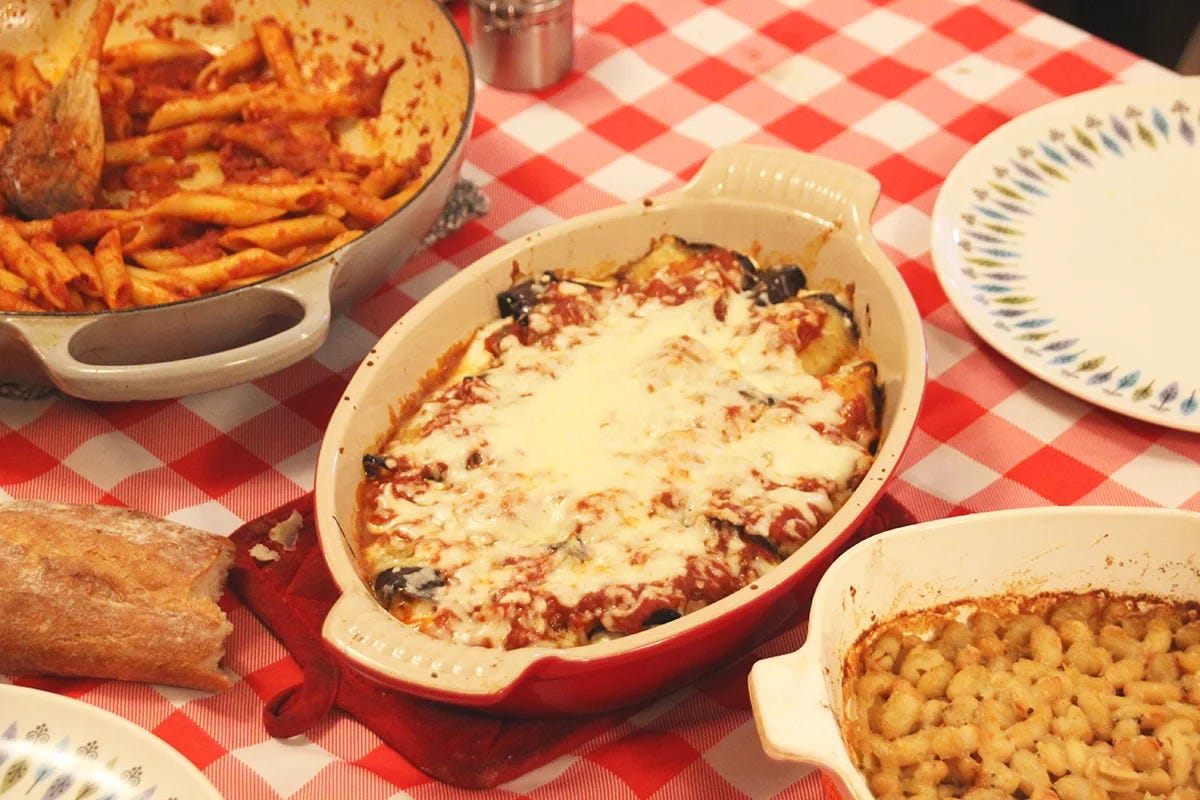
If you ever wondered: does the guy who writes about red sauce joints have a red-checked tablecloth, the answer is yes.
I have two, actually, but one of them is the “good” tablecloth that I only bring out for book events where there’s a low risk of permanent stains.
Earlier this week, we cooked up a simple red sauce with pasta, but ended up with far more sauce. So what does one do when you have too much sauce? Eggplant rollatini, obviously.
You won’t find an Italian menu with rollatini on it. In Italy, the dish is better known as involtini di melanzane. The di melanzane indicates involtini made of eggplant (And if you’re wondering, Eggplant Parmigiana is Melanzane alla Parmigiana), distinguishing them from involtini of meat or fish.
Involtini di melanzane is a southern Italian dish, more common in Naples or Sicily. In Sicily, the eggplant is often stuffed with breadcrumbs, following a long tradition of boosting the calorie counts of foods with old, stale bread. Fillings vary though, with cheese and meat also common. In the United States, rollatini is typically filled with a ricotta cheese mixture that includes an egg as a binder.
Involitini are made across Italy with meat or fish as the wrapper, and as with any Italian dish, variations based on regional preference and availability. Saltimbocca, veal rolls with ham, are a type of involtini for instance.
Italian American braciole is another form of involtini. Americans used thin strips of pork or beef and either grill the rolls or cook them in a Sunday gravy. American braciole may also be served on a hero roll as a sandwich, as is common at festivals like San Gennaro or the Giglio festival in Brooklyn. However, in Puglia, “brasciole,” is a type of involtini typically made from horse meat.
In the United States, eggplant parmigiana was more widely known than rollatini in the early 20th century, and by the 1940s and 1950s, widely recognized by name. (Veal parm was already a popular dish by this period too).
It wasn’t until the 1970s that eggplant rollatini was being widely advertised by name, and recipes don’t start showing up in the casual domestic magazines until the 1980s with a recipe in Good Housekeeping in 1985 and Redbook as late as 1993.
That isn’t to say rollatini didn’t exist before then; eggplant rollatini almost certainly was being cooked by Italian Americans. But it wasn’t until the 1970s the phrase was well enough known to have it advertised widely. And even then, it wasn’t cemented as an eggplant dish. Cosmopolitan actually references rollatini di vitello — veal — in a 1971 article, “How to Order at an Italian Restaurant.” Again, the term rollatini is an Americanism. But by the end the decade, eggplant rollatini would become a mainstay.
What eggplant rollatini eventually became was a common luxury. Something fancy, but not so fancy it couldn’t be mass produced. What buffet dinner would be complete without a tray of rollatini? Certainly no wedding buffet in New Jersey. And how many holiday parties features a tray with a Sterno underneath?
The meatless dish is a favorite precisely because it can check the box for vegetarians, though since the rollatini is stuffed with fresh ricotta vegans and those who are lactose intolerant are not so lucky.
There are many ways to prepare the eggplant. Personally I believe in the trick is pre-cooking the eggplant enough that the skins will soften while baking, before the cheese dries out and the sauce begins to burn. My preference is to fry the eggplant in olive oil after dredging the slices in rice flour.
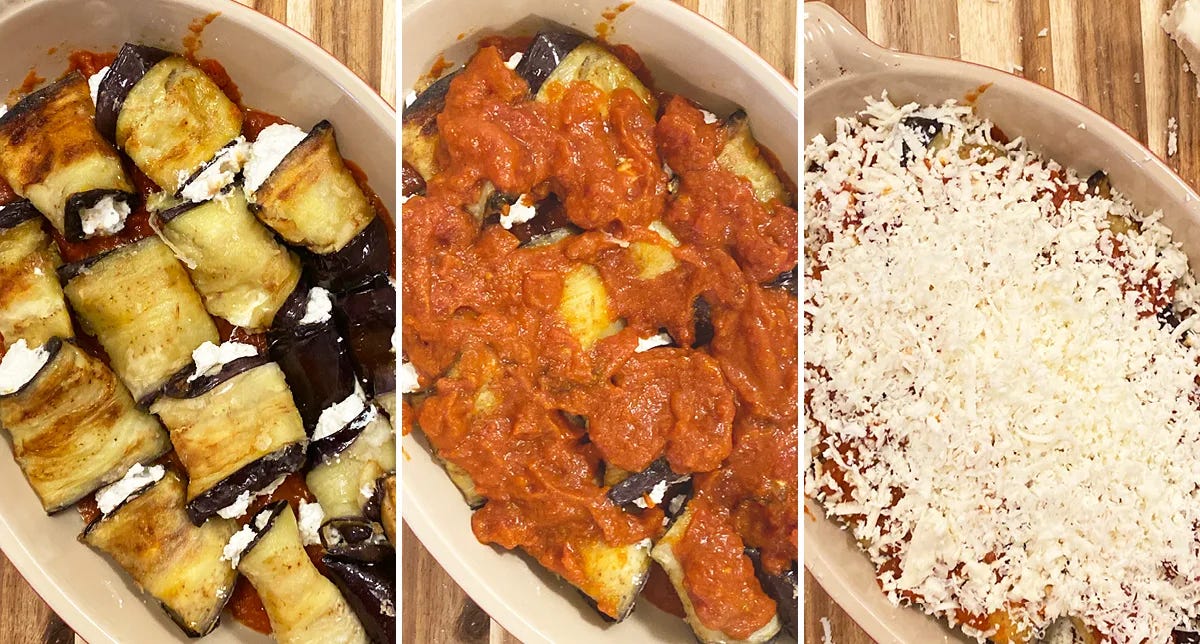
The rice flour, much like corn starch, dries out the vegetable, and creates a thin, crispy crust. The eggplant can still bend, but crunches a little bit. Some recipes call for a full flour-egg-breadcrumb batter, but this makes the dish heavy.
The other choice I make is skipping the egg in the ricotta filling. Plenty of recipes suggest that’s a great way to firm everything up, and it will. But I find the texture is better with creamy cheese spilling out than the sticky, clumpy cheese.
We served the eggplant with leftover penne and Tuscan-style white beans.
Eggplant Rollatini
INGREDIENTS
Two Italian eggplants
15 oz ricotta cheese
Freshly ground parmigiana cheese
Dash of onion powder
Dash or two of garlic powder
Black pepper
Pinch of dried parsley
Hazan’s tomato sauce from earlier in the week
Rice flour, about half a cup
Fresh mozzarella cheese (or low moisture; chef’s choice)
Olive oil for frying (avoid other oils as eggplant likes to absorb oil)
INSTRUCTIONS
Slice the eggplants into long strips, like heavy wooden blinds
Soak the eggplant slices for 30 minutes, draining and refilling water once
Salt and rest for a few minutes
Soak up excess moisture
Dredge the eggplant in rice flour
Gently fry in olive oil
When strips are golden and tender, rest on paper towels
Combine ricotta with parmigiana cheese, garlic, onion, black pepper, and parsley
Allow the eggplant to cool
Layer sauce on the baking dish
Scoop a spoon of cheese mixture onto the end of a strip of eggplant.
Roll the eggplant around the cheese and place seam down in the tray
Arrange in rows until eggplant and cheese is used up
Leftover cheese can be spread on bread or crackers (aren’t you glad we didn’t add an egg?)
Top the eggplant with a layer of sauce
Grate mozzarella on top of the sauce (for a lighter dish, sub in a sprinkle of parmigiana)
Bake for about 15-20 minutes at 375F
Serve with pasta
The Latest
American Cheese Shortage Strikes Japan
If you’re looking for American cheese on the shelves Costco Japan, you’re out of luck. That’s putting pressure on Tokyo’s Philly cheesesteak scene. Reactions were mixed, reports the Philadelphia Inquirer, but whiz and provolone are still available.
Corn Twinkie Is Austin’s Newest Breakfast Pastry
Taco expert José R. Ralat looks at the origins of a Twinkie-style pastry made from Mexican masa. The log-shaped sweet is made from corn and filled with cream, a yellow version with orange buttercream and a blue corn version filled with chocolate. The sweet treat piqued the interest of Sam Stone back in 2025 at Bon Appétit.
Ramps!
Danny Palumbo dives into the world of ramps, the wild onion delicacy. The demand is driving ramp clusters towards extinction.
The World Cup Is Cooked, So Why Not Cook the World Cup?
Tim Murphy at Mother Jones took on a project of cooking foods from each of the World Cup countries.
Jell-O Shots Are Getting an Upgrade
Mixed cocktail Jell-o shots are so hot right now. Megan Krigbaum at Taste looks at how bartenders are mixing up, and solidifying these little treats. I had my first cocktail Jell-o shots about twenty years ago at a house party. Friends Oscar and Sarah had concocted sidecars and gin gimlet Jello-shots and they were absolutely fabulous, and as it turns out, just like a regular cocktail, they can really mess you up.
Scotch Bonnet Shortage
Spicy scotch bonnet peppers used in some of hottest hot sauces are facing a shortage. Essential to Caribbean cuisine and a huge cash crop of Jamaica, the peppers have faced some troubles in recent years. Hurricanes and extreme weather events are the primary driving forces.
Is That Enough Cheese?
Microsoft’s Copilot suggested between 1,600 and 2,400 pounds of cheese would be the correct amount for a gathering of 80 people.
oh what a lovely explanation and tribute to rollatini