Food Notes: 7/7 Green Beans
Green beans, berries, bagels, and more things that start with b

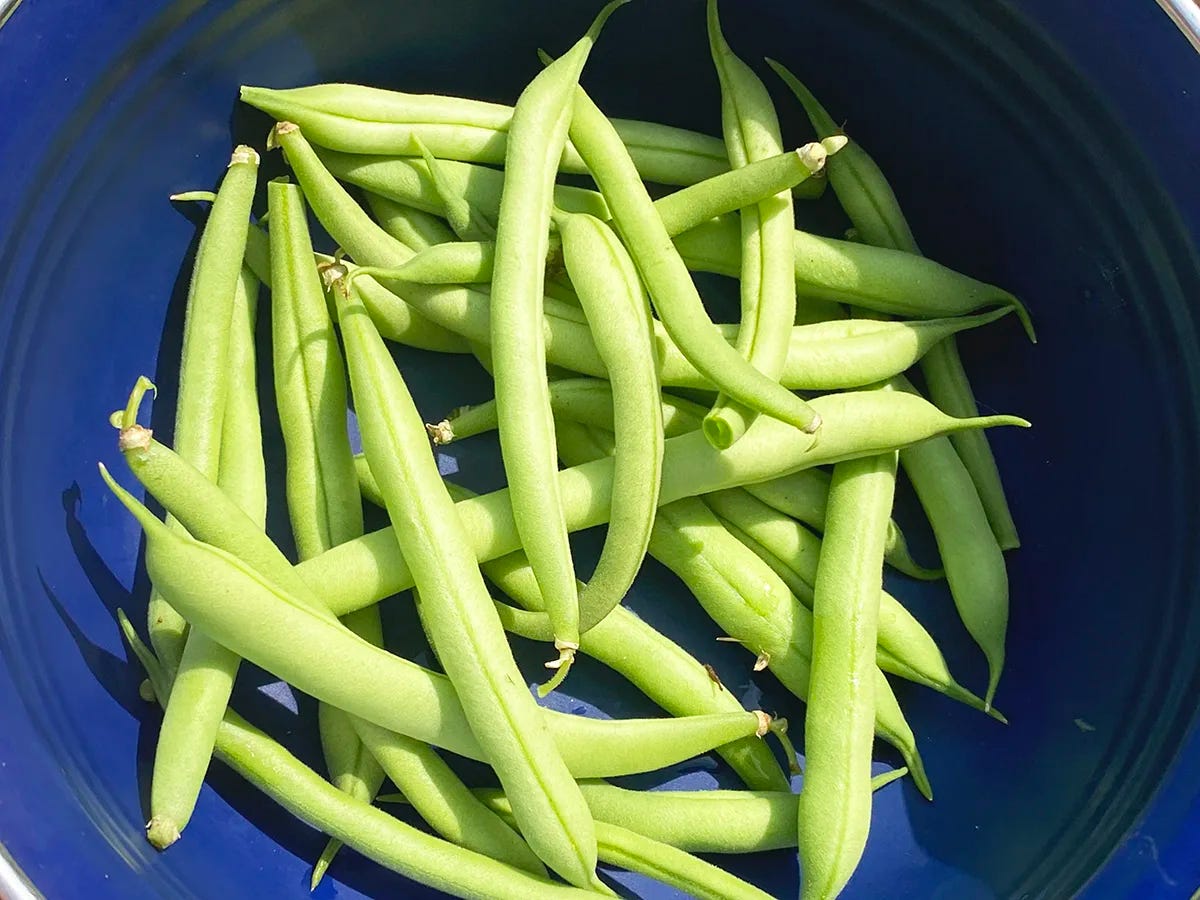
I harvested some green beans.
In last week’s garden update, I noted some of the things I’ve been growing out on Cape Cod. I harvested this bowl of beans from the six plants we have growing (and since then another bowl about half this size). Needless to say I’m already plotting to expand our bean cultivating next year.
The great thing about beans is they help revitalize soil. Their root systems, and bacteria that attract to them, pull nitrogen out of the atmosphere and add it back to the soil.
Beans have been around for a long time, showing up on every inhabited continent, and eaten by early humans thousands of years ago. What we think of as green beans — French beans, string beans, snap beans — have a more recent evolution. Green beans’ ancestor can be found in north, central, and south America where they were first domesticated. The New World, as the Europeans dubbed it, had many beans with big seeds — the “bean” as we think of beans today. With green beans though, we prize the pod rather than the actual bean.
Margarett Waterbury dug into the history of cultivation over at Medium. According to her, key part of the snap bean, the edible pod, was something that colonial powers began to breed into the snap beans after acquiring them in Mexico and Peru. Waterbury also hypothesizes the acceptance of these beans has more to do with European familiarity with lentils and chickpeas, unlike say, the tomato.
While most varietals of green beans today no longer have a fibrous thread stretched along the lengthwise portion of the bean, this trait was something bred out of the green beans in the 19th century.
C.N. Keeney, a plant breeder set out to grow beans without this burdensome string. He painstakingly searched whole fields of beans looking for plants without the string, snapping a single bean from each, and then harvesting seeds from the remaining plants. He was looking for a needle in a haystack.
The fact that we no longer sit around peeling strings from green beans should tell you he had some success. He developed 9 cultivars of stringless beans, and unsurprisingly these proved popular as fresh beans and in canned varieties.
My harvest arrived unexpectedly. One day I had bean plants with flowers, and two days later a harvest of beans. Clipping off the beans before they grow too long is supposed to help them continue growing beans all summer long. Hopefully I grabbed these beans before it was too late.
I had just enough for a small side dish for two people — perfect since our five-year-old does not eat green foods.
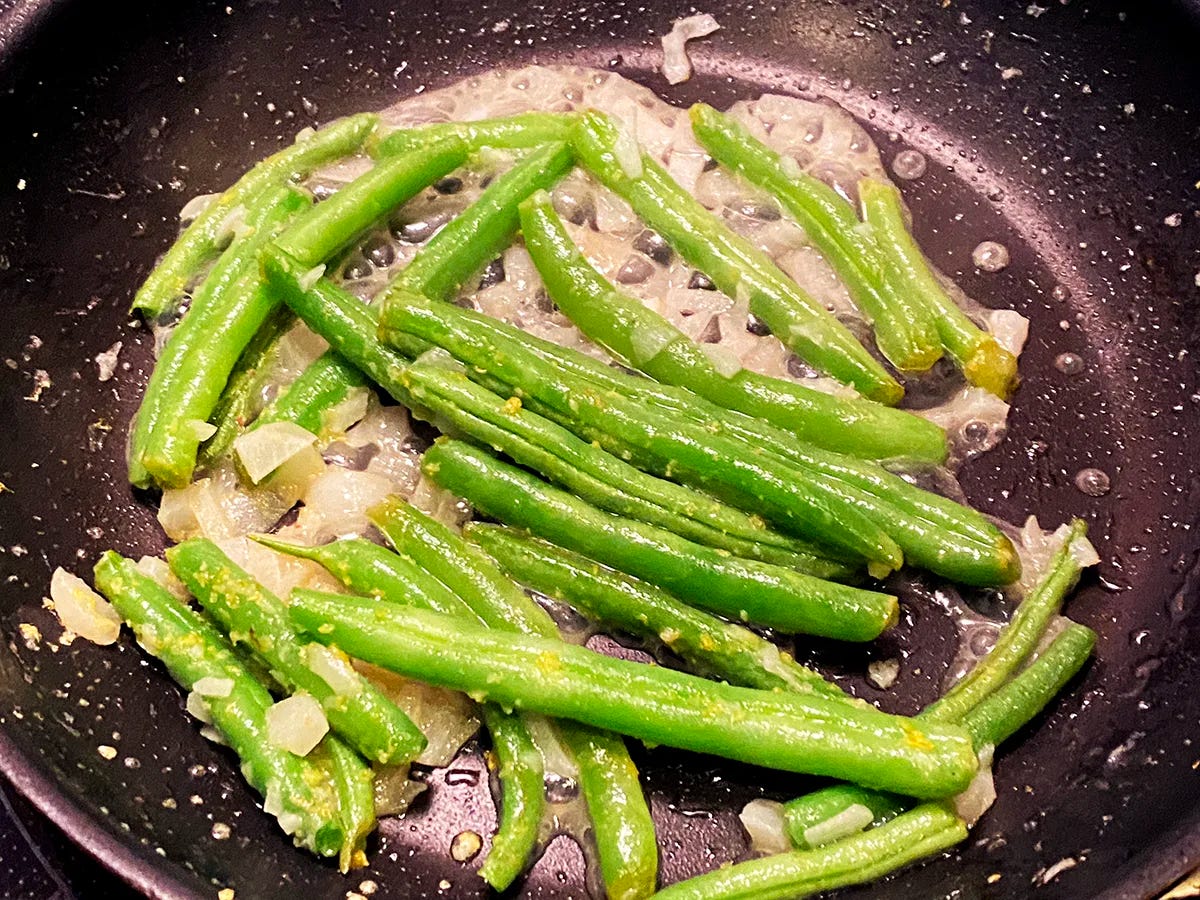
Garden Green Beans with Garlic
INGREDIENTS
Green beans plucked from your garden
Two bulbs of locally sourced garlic
Zest from half a lemon
Butter or olive oil
INSTRUCTIONS
Snap the ends of the beans
Finely chop the garlic
On medium heat, combine butter, beans, and garlic
Cook gently
Add lemon zest
Season with salt
Taste and serve when desired consistency
The Latest
Gen Z Killing Bagels
PopUp bagel started out as the concept of a bored rich guy during COVID. Now its a hot new chain selling bagels and dip — cream cheese, sometimes with a cool collab mix-in. The big thing about this new bagel shop is that its all marketing. DJs, cool slogans, and lines. What it doesn’t have is a variety of bagels. Instead of multiple types of dough (pumpernickel, egg, blueberry, whole wheat, ect), there’s just plain white bread. There’s a choice of seeds, but that’s it. Grub Street looks into this new trend, and the scourge of bad bagels.
Berry Tech
Sustaining your toddler’s berry addiction is a modern marvel driven by R&D from Driscoll’s. The once fragile, seasonal crop — blueberries, strawberries, blackberries, and my personal favorite, the raspberries — have become an international refrigerated commodity available 365 days a year, around the globe. The New York Times looks into the story of how the family-owned Driscoll’s invested heavily in creating new cultivars and building a global network to keep those berries on store shelves.
Tough Career Choices
John Devore, a James-Beard award-winning essayist started Ozempic. He makes the journey sound unappetizing, but also describes how it makes writing about food nearly impossible.
Chips and Salsa Go The Way of Bread Service
Restaurants have started charging for chips and salsa. Like the classic bread basket that was once gratis, inflation has driven up the price of gratis chips. That’s okay, and maybe a good thing, argues José Ralat, since it can mean better choices.
Waiting On Restaurant Lines is Now a Job
As viral foods drive restaurant lines, there’s now a cottage industry of line sitting. In what harkens back to the first iPhones, people love waiting on line, but also some people will pay big money to not. Line sitting makes me think of Marc Rebillet, who was first on line for the new iPhone, and sold the spot for $800 to a woman who planned on buying all the iPhones. She hadn’t bothered to read that Apple was limiting sales to each customer.
And One Last Thing
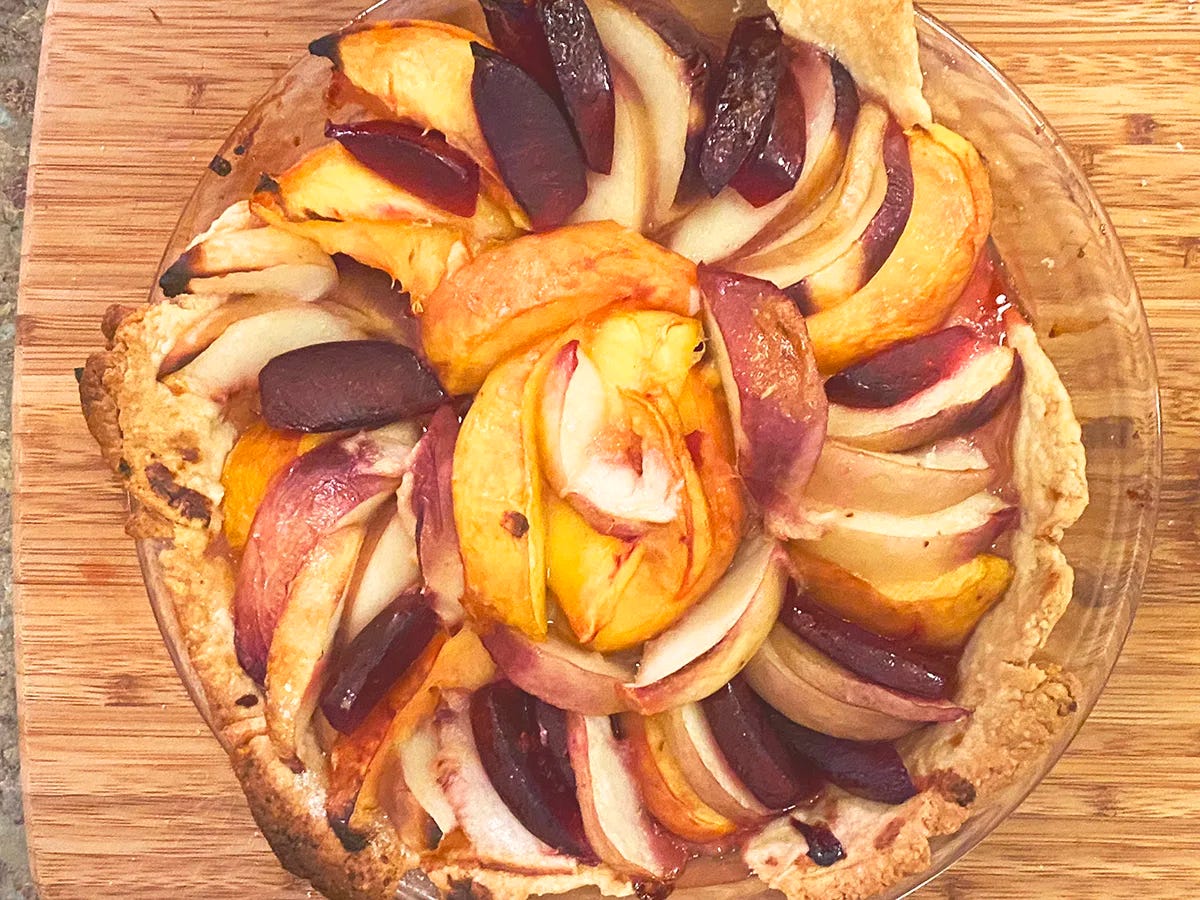
I baked this stone fruit tart with white and yellow peaches and a red pluot.